 Family of Sites
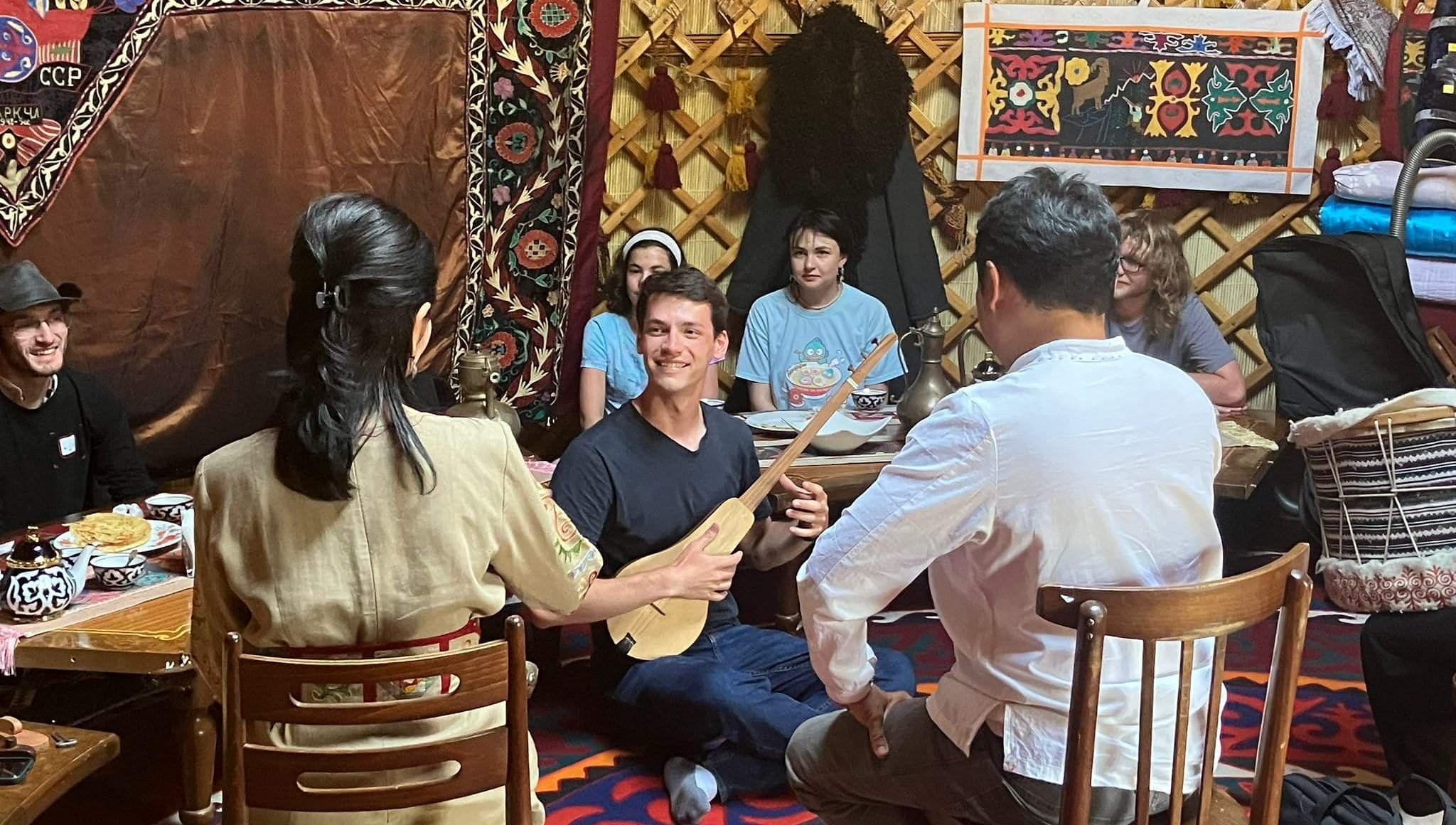
What’s it really like to live in Bishkek for a semester? Staying long-term in a city is much different from just vacationing there. You’ll need to navigate more of the practical, everyday services of the city and you’ll need to budget for more miscellaneous and long-term expenses. Thus, this guide covers everything from haircuts and pharmacies to gyms and computer repair. The advice here comes from SRAS staff on the ground in Bishkek as well as graduates of SRAS Programs in Bishkek.
A Practical Introduction to Bishkek
 Bishkek is set amid the rolling hills and soaring mountains of Kyrgyzstan, a country rediscovering its identity, its long history, and many nomadic traditions. Kyrgyzstan is also maintaining its heritage of bilingualism: Kyrgyz is common in homes while Russian is most common on city streets.
For students of Central Asian Studies, Bishkek is an excellent vantage point for understanding a region that is growing in geopolitical and economic significance. For anthropology students, Bishkek is fascinating: a society that has seen both rapid development and the preservation of traditional nomadic lifestyles. For students learning the Russian language, Bishkek offers a unique, immersive, and highly affordable experience. It’s also surrounded by beautiful nature to explore.
- More on Kyrgyz history from GeoHistory, part of the SRAS Family of Sites.
- More on history of Central Asia from GeoHistory.
Video: A Day in the Life of the SRAS Bishkek Program Coordinator
Budgeting and Packing for Bishkek
Students in Bishkek report spending about $80-90 a week if in home stays and about $100-115 if in the dorms. average over the course of their stay. This covers groceries, eating at the university cafeteria, city transport, eating out, school supplies, modest weekend entertainment, and other general living expenses. Note that this guide assumes 87 som is about $1.00. Prices current as of March, 2026.
You can compare the cost of living in your home city with Bishkek with a handy feature on Numbeo.
Packing: Bring clothing appropriate to the region (tank tops or other skin revealing clothes should be avoided), gifts for friends and/or host families are encouraged, a water bottle with a filter, and any prescription medication you are taking in amounts to last the duration of your time abroad. Bishkek is sunny most of the year, with a few grey winter months. In any season, you’ll want a good hat and boots with good traction to handle sun, ice, uneven sidewalks, and lots of hiking. In summer, bring light clothes, sunscreen, bug repellent, and a swim suit. Summers are hot and air conditioning is not standard. In Kyrgyzstan’s cold winters, heat is provided by city-wide systems, but you’ll still be spending a lot of time outdoors, so dress in layers. Check our packing guide for more information on preparing for your trip.
Card Fees. Call your banks and credit cards! Let them know the dates you’ll be abroad, otherwise, credit cards tend to be shut off when they appear abroad – with the assumption that they’ve been stolen. Most US banks will charge fees for every transaction you make abroad. Fees of $5 and/or 3% for every ATM withdrawal, for instance, are common. “Foreign transaction fees” are common for credit cards too. Make sure you understand these fees and factor them into your budget. See our Guide to Managing Cash Abroad for more information.
Use Local Currency with Card Transactions: Businesses abroad often offer the option of pricing in dollars or local currency for card users. Pricing in dollars may seem convenient, but it is always higher than what you will pay if you pay in local currency.
Recommended Banks/ATMs: Be careful about what ATMs you use in Bishkek. Those run by Demir Kyrgyz Bank are trustworthy and offer exchange, ATM, and cash advance. The Kyrgyzkommertsbank ATMs, including the one at TsUM, are also a safe bet. Optima Bank is also a safe option and has some of the lowest fees.
Flexibility: You should always plan some flexibility into your budget. There will always be expenses that you didn’t plan for – a new umbrella, a better coat, a short trip with a new friend to somewhere incredible…. you get the point.
- Complete Guide to Managing Cash Abroad has more information.
- More About Life in Bishkek from SRAS Graduates
Food and Shopping in Bishkek
Average weekly total food spending: ~$15-$25 per week
Groceries: London school students who stay in the main dorms usually shop at the large, nearby Vefa center. The dorms have a refrigerator, range, and microwave, but no ovens. Most groceries are quite cheap, though they add up fast if you buy imported items like peanut butter (about $3.50 a jar). Milk runs $0.50-$1 per quart. A lepyoshka (a big, round bread) or a 400-gram bag of pasta will run you around 30 cents. Apples range from 70 cents to $2.50 per kilo. Five-liter bottles of water (if you didn’t bring a water filter bottle) run about 75 cents. It is cheapest to shop at the bazaars, where products such as fruit, vegetables, and nuts are higher quality and sold in bulk. Average weekly grocery bill: $7-11 per week (lower for home stays).
University Cafeteria: The London School Canteen is the cheapest lunch option around the area. A meal will cost you $1-2. Average spending at the canteen: ~$7 per week.
Coffee: One can buy a decent coffee for $2 from chain cafes such as Sierra and Giraffe. Tea and coffee in local cafes is often $1 or less.
Eating out: Samsa (a stuffed pastry) at a street stall is filling and costs about 50 cents. Dinner at a cafe will run you $3 to $7. Portions are much smaller than in the US, so most students tend to order 2-4 dishes. Main courses are usually around $3 or $4 — meatier entrees a little more, noodle-y ones a little less, and salads, soups, appetizers, etc. less as well. Most restaurants include a 15% tip in the bill, but watch for when its not included to make sure the server gets something.
Student Reviews of Shopping and Eating Out in Bishkek
- Local Food in Bishkek
- Western-Style Comfort Food
- Coffee Shops in Bishkek
- Asian Food in Bishkek
- Vegan and Vegetarian Guide to Bishkek
- Kosher in Bishkek
- Guide to Shopping in Bishkek (from groceries to souvenirs and electronics)
Transport in Bishkek
Average weekly transport spending: (dorms) ~$1-2 per week; (home stay) ~$3-6 per week
The London School Dorms are adjacent to the school, so transport is not a daily need for dormitory students. For homestays, it will be a daily need.
Map Apps: Locals favor 2GIS for digital mapping. Bus.kg also tracks all Bishkek’s public transport routes.
Marshrutki are the infamous boxy white or yellow minivans that are usually crowded and moving fast. At 10 som (about a dime) a ride, the marshrutka is the cheapest way to get around, and the second-fastest, after taxis. You need a bit of language to use them. State your destination and pay the fare the driver states when you get in. You are expected to call out when you need the marshrutka to stop; it may not otherwise do so. Use the 2GIS app to track where you are, and, when you near your destination, call out “ah-stah-nah-VEE-tyes” (остановитесь). This experience can be a culture shock to newcomers.
Trolleybuses: These are large buses that have regular stops throughout the city. They cost a bit less than $0.10 per ride. Get on through the back doors and pay when you are getting off.
Taxis: Taxis can be hailed from the Yandex app. Don’t hail rides from the street – the app is safer and more reliable. Rides typically cost between $1-8 for rides throughout the city.
Be Polite: Local culture dictates that one must surrender their seat to mothers/grandmothers with kids, older folks, or anyone carrying bags on public transport.
Bike Rentals: For bicycle rentals, there’s VeloPro, where you can rent a bike by the day or hour. If you would like to traverse the city by cycle, be aware that bike lanes do not exist and sidewalks are often uneven and filled with pedestrians.
Communications in Bishkek
Average total MONTHLY spending for communication: $9-15
See our Packing List for more information about bringing electronics abroad.
Mobile service and data: SRAS requires that students have phones that work locally while abroad. Students have several options for this, each with multiple providers with multiple plans. Consider carefully the features you will actually use – especially data. Calling rates are often not as important as you can easily use WhatsApp or similar web-based communication apps. Each provider usually offers both SIM and e-SIM options. Newer phones can accept e-SIMs, usually multiple at once for added convenience.
Your options are:
- Get local cell service. This is usually the cheapest option if you don’t already have an international plan. SRAS will assist you getting a local number if you don’t have a number that otherwise works in Krygyzstan. Cell service in Kyrgyzstan is typically pay-as-you-go. For very basic calling/texting, students can spend around $1-2 a month. Students with unlocked smartphones can purchase a SIM card at either Megacom or O!. A monthly plan for calling/texting and 30GB with Megacom costs ~$5.
- Get an e-SIM. These are most useful if you plan to travel between countries while abroad. They often have roaming included whereas local or US numbers do not. You might try Maaltalk, Airalo, Maya or one of the many other providers out there.
- Have a US-based plan with international roaming. This is often the most expensive option, with T-Mobile offering some of the most favorable plans.
If you plan to use your current phone for any of these options, you will need to make sure it is not “locked” (tied to a single carrier) and can accept a new or additional SIM or e-SIM. Contact your current provider if you are unsure.
High-speed Internet: Internet at the London School dorms tends to be spotty and unreliable. Students without mobile data often walk to cafes near the school to work on their homework assignments.
Computer Repair: Planeta Elektroniki has some electronics and offers computer repair.
Post: The main post office is centrally located at the corner of Sovetskaya and Chui. You can purchase stamps and mail letters there. For shipping or receiving packages or important documents, try the local FedEx or DHL, as they are nearly always faster and safer to ship things with—though quite expensive. For opinions on the best/quickest/cheapest shipping options to and from Bishkek, join the Expats in Bishkek Facebook group to search or ask questions related to this matter.
Health, Medicine, and Fitness in Bishkek
Budgets for health and medicine can vary based on student lifestyle and needs. Any SRAS concerned about this category is encouraged to discuss it with their SRAS representative.
Water/Water filters: Water filters can be bought at most larger grocery stores and many pharmacies. Bottled water is cheap and everywhere and water filters are widely available in larger supermarkets appliance stores. It is generally not recommended to regularly drink the tap water in Bishkek.
Sport: Check out our Guide to Fitness, Training, Gyms, and Jogging in Bishkek!
Medical Care: If at all possible, call your insurance before seeing a doctor. See this page from the US embassy for various doctors and clinics.
Pharmacies: Bring a supply of needed medications with you, but don’t be concerned if you forget some general medications like ibuprofen. If you need something, look for the international symbol of a green cross or the word “аптека.” If looking for something specific, try looking it up on Wikipedia in English and then clicking on “Russian” in the language menu on the left panel. Here you can get many things without a prescription such as antibiotics, just know the local chemical name for it when asking (ask locals or the Expat page about specific names). If you catch a little bug and aren’t sure what you need, you can explain your symptoms to the pharmacist and they will gladly advise you on what you need.
Eyeglasses and Contacts: Just like pharmacies, you can find “Ochkis” on most streets. These are small stores where you can buy all things glasses and contacts as long as you can tell them your prescription strength, no actual prescription needed when you ask. Contact solution is available and glasses are usually about a fourth of the US price. Contact lenses are lower in quality than in the US, but safe and effective with a three month supply priced around 10-15 US dollars. Check out this review by an SRAS student who got new glasses while in Bishkek.
Personal Grooming and Hygiene
Hygiene: Shampoo, conditioner, deodorant, and toothpaste – in brands you are likely to recognize – run about $2 per package. The tampon selection is significantly cheaper than in the US, though also much less varied. Be advised that there are no options with applicators.
Laundry: The dorms offer free washing machines and detergent can be bought from the Vefa center. Homestays also have free washing machines, although you should be polite when asking to use them.
Dry Cleaning: Try Eco Dry for reasonably priced services.
Banyas are a recommended cultural experience. They can also be a near-necessity when Bishkek shuts down the city supply of hot water for yearly maintenance each summer. See these reviews for good, reasonably-priced cultural experiences. Some good tips for first timers: bring a towel to dry off with but use the bed sheet-like thing they give you as a wrap in the actual saunas (don’t wear swimsuits!). Bring snacks or even a picnic with you. Always bring water and your own shower supplies – but don’t worry if you forget something, you can always buy it at the banya! A normal 3-4 hour session with a few extras like tea, a sheet, and a birch branch will run you around $8.
Barber Shops/Hairstylists/Salons/Spas can be found on nearly every street corner of the city, especially around the London School. Haircuts come in around $5-10, shellac manicure around $8, massage around $20. You might also want to look up how to talk about haircuts in Russian before heading out!
Culture and Entertainment
Entertainment and incidentals are the most variable expenses you’ll face.
Museums: Bishkek abounds in museums on nearly any subject that might interest you. Most museums will cost between 0 and 500 som with student discounts.
- Guide to Bishkek’s Top Museums (by SRAS staff and students)
Performances: There are a number of movie theaters throughout Bishkek; tickets are between $2 and $4, slightly more for the rare English-language showing. Ballet and opera tickets are also quite cheap, ranging from $3-8.
- Recommended Venues in Bishkek (by SRAS staff and students)
Nightlife: Bishkek has a number of affordable and very night spots!
- For music, see Chicken Star is great for their food (Korean fried chicken), company (everyone is very friendly there), frequent concerts, and Saturday open-mic nights. Blonder Pub (24 Ibraimova) also often has live music. Somewhere Bistro (Jibek Jolu 487), a popular expat spot, has live music on the weekends and trivia night on Wednesdays. Rock Bar Zeppelin also has bands that students have enjoyed.
- For craft beer and micro-brew, Steinbrau offers freshly brewed beer and German dishes, plus local favorites like shashlyk. Brewster usually has six beers on tap from Raccoon Brewery Co, a local Bishkek brewery.
- For dancing, Promzona is one of Bishkek’s longest-standing nightclubs.
Religion: The predominant religion in Kyrgyzstan is Islam, and scores of mosques have been built there in recent years. There are also religious meetings held for most world religions. The International Church of Bishkek is the city’s main Protestant church, with two services every Sunday. Tea and coffee is served between services and after the second, members of the congregation often go to a cafe for lunch together. The congregation is about 80% expatriates and 20% locals. The Church of St Michael is a Catholic parish offering mass in English and Russian. The Holy Resurrection Cathedral is where you can visit an Orthodox service for a true Russian cultural experience. For resources on Judaism, check our extensive Guide to Jewish Bishkek. Those interested in local Islam should check out the Great Mosque of Bishkek (Gogol St, 53) and the newer, larger Borborduk Mosque (Semashko St.). Lastly, Buddhists have a spiritual center called The Place of Path on the outskirts of the city in the village of Gornaya Maevka.
Charitable Giving and Volunteering
Volunteering: Some SRAS students have, in their free time, volunteered with church groups and others. Check with SRAS if you are interested. We can provide you with a list.
Charitable giving: Try Реабилитационный центр “Оберег” для детей и молодых людей-инвалидов. Other opportunities to give to local charities and volunteer can be found through religious organizations such as International Church Bishkek, which works with and funds several charities, or the local Jewish center, which runs a soup kitchen.
Travel from Bishkek
If you are going to blow some money in your budget – SRAS recommends you do it on travel. See more of the country and wider region and meet more of the people while you have the chance to do it quite inexpensively.
SRAS students have written reviews on a whole list of inexpensive day trips and affordable weekend trips you can try. We also have an extensive guide on visiting Almaty, Kazakhstan, which is about four hours away by bus.
Let SRAS know EVERY TIME YOU LEAVE BISHKEK! This is for safety, but also because there may be registration or visa issues involved in your trip that we may need to advise you on.
Find Out More About…
- Programs in Kyrgyzstan
- Kyrygz Food
- Kyrgyz Identity
- Kyrgyzstan History
- Kyrgyz Language
- Kyrgyz Holidays
- Bishkek Student Housing
- SRAS Bishkek Programs (Student Reviews)
SRAS Students on Bishkek’s People and Prices
What is life in Bishkek really like? To help you stay up to date, we’ve asked our students to share what they found while abroad in Central Asia!
- Finding Things
SRAS: First, think of the city – what was available in terms of culture, shopping, and services. Were you able to find things to do and the goods and services you needed? What was missing? Were there any pleasant surprises?
Camryn Vaughn (Fall, 2019): I was anticipating that a lot of comforts from home would be difficult to find, but I was surprised that I have had no troubles getting a hold of any products or services. The London School’s location is very helpful, too. The grocery store called Frunze located in the Vefa Center shopping mall a short walk from the school is generally the best place to purchase groceries and sometimes household goods as well. A great variety of frozen foods, produce, snacks, drinks, deli salads, etc. are all available. You can also find notebooks, pens, toiletries, dishes, and cooking utensils. Of course, all of these things and anything else you could possibly need can be found at the bazaars around Bishkek. Prices are cheaper than at a store and haggling is welcome. The bazaars are large and can be difficult to navigate by one’s self; make sure to bring a friend (preferably someone who has previously been) and read up on the several bazaar guides students have put together.
If you can’t find what you’re looking for at the Vefa Center or at the bazaars, the grocery store Globus has a lot of products and there are several locations in the city. Mia Home is my favorite store for buying household goods to make the dorms a little cozier. Things like candles, Christmas lights, and decorations can be found there.
Beauty services are easy to find and quite cheap. Treat yourself to a massages or manicure, which typically costs 1500 (21.57 USD) and 500 som (7.16 USD), respectively. There is a Google Drive folder created by a previous SRAS student with recommendations and contact information. Gym memberships aren’t necessarily cheaper but are easy to arrange. There are several located near the London School.
Many casual restaurants are located near the school. A meal at one of these usually costs less than 5 USD.
The Expats in Bishkek Facebook group has been a really great resource for learning more about what’s out there. WhatsApp numbers and Instagram handles are usually shared, which are used more commonly by businesses than websites to advertise and communicate with customers.
Mikaela Peters (Fall, 2019): Kyrgyzstan mostly has the same services available as any other city. The only difference is, I don’t always know where to find every single thing that I may be looking for. As an American, I am so used to being able to go to Walmart, or even the Dollar Store, for little things that I need, such as something like a vegetable peeler. While you can find vegetable peelers at the bazaar, it took me awhile to figure that out. I have always been surprised that clothes here really are not that much cheaper than what they would be in America, unless you buy them second hand. In terms of things like getting a massage, getting my nails done, or any other services, I generally just ask a local I know, and they recommend a place. I’ve been taking advantage of these services more than I would in America since they are significantly cheaper here by about four times the cost. These were services that I never bothered to look into the first time I was here, since I was here for such a short time period. Although services are cheaper, using sports facilities is actually more expensive than in America. While I would like to, for instance, get a gym membership, or go to the pool, I don’t think it is worth it to pay $12 for a day of swimming or pay $45 a month for a gym membership. I will save these activities for when I get home. For now, I am happy running through town while local people stare at me like I am crazy.
Despite Bishkek being a modern city, people are still intent on preserving their culture and this manifests itself in local people making sure that foreigners know about all local food and that they have tried each dish. I never feel at a loss for experiencing Kyrgyz culture. While the food, to me, is a large part of the culture, so are things like riding the marshrutka and buying your groceries at the bazaar. I try my best to participate in all of these activities and am usually successfully able to do so with the help of some local friends.
- Prices
SRAS: How were the prices abroad? Did you find your host city affordable in terms of food and entertainment?
Camryn Vaughn (Fall, 2019): I imagine that Bishkek is one of the most affordable options I could have chosen for my study abroad experience. I treat myself to a lot of things that are usually a little too expensive to do regularly at home in the U.S., such as eating out, manicures, and massages. Transportation is really cheap as well. The marshrutkas (while not always necessarily comfortable) are functional and 14 cents per ride. Taxis across town are almost always under 100 som (1.43 USD) with the Yandex Taxi app. Mikaela’s food budget estimates have proven true for me as well. Weekly grocery trips are generally $14 or under for me.
Mikaela Peters (Fall, 2019): There is a very particular reason why I like Kyrgyzstan, aside from it being a great place to learn and practice Russian. It is incredibly affordable, especially for a student on a budget. While I strive to eat at home as much as possible while I am in America, I do not restrain myself from eating out very much while in Kyrgyzstan since you can get a meal for anywhere between $2 and $6. One of the best parts about life here is how cheap and delicious vegetables are and how you can buy them on the street in almost every corner of the city. I can go grocery shopping for a week for about $14 and that would include a half kilogram of an assortment of about five different vegetables. Locals often say that foreigners love it here because it’s cheap. I couldn’t agree more.
Depending on the entertainment, entertainment can likewise be fairly cheap. Going out and drinking alcohol can add up fairly quickly, just like it would in the States. But going to the movies, a dramatic performance, rock climbing, or even going skiing, will also be at least a third of the price of what it would be in America. Although Kyrgyzstan is not very developed, its low cost of living seems to compensate for that misgiving.
- People
SRAS: How were the people you met? Were you able to generally complete transactions with any professionals you interacted with (at offices, cafes, shops)? Did you find local friends to share your free time with?
Camryn Vaughn (Fall, 2019): I never experienced any problems at businesses that I went to. I found Kyrgyz speakers difficult to understand when they spoke Russian and it has taken some time to get used to. I had to often ask my host family to speak much more slowly and enunciated to me and I sometimes have to ask servers and cashiers to repeat themselves as well, but everyone has been very patient and understanding, which I appreciate. The London School organized weekly conversation partners for the SRAS students, as well as monthly discussion panels with local students. I exchanged contact information with several people I have met. Additionally, I have met a few local friends in shared taxis coming back from horse treks and skiing. Young people are always eager to get to know you and are generally interested in showing you around or suggesting cultural experiences.
Mikaela Peters (Fall, 2019): There are rarely people I encounter in Bishkek that I don’t like. I have had a few instances, particularly at cafes, where due to my accent, which I hopelessly have not yet been able to get rid of, it seems to confuse servers and they order for me something that is like what I ordered, but not quite, such as getting a frappuccino instead of cappuccino or getting shrimp on my salad when I really said chicken. I have had people ask me if I understand Russian, or if I can even read and write in Russian. This sort of situation happens rarely, but it happens nonetheless. While Bishkek does have a considerable amount of foreigners relative to other places in Central Asia, that doesn’t prevent people from being surprised that you’re a foreigner, or in my case, from having people attempt to start talking to you in German due to the accent they hear. Once people start talking to me, they do still seem to perceive me as fluent in Russian, but the initial accent just seems to throw them off at times.
I have a lot of local friends, and I love interacting with them because it helps my Russian immensely. I try to make friends with people who either barely speak English, or speak English somewhat poorly so that they only really feel comfortable speaking to me in Russian. I am also at a point where I feel more fluent, so it is fairly easy for me to interact with my friends and hold conversations with them, tell them stories, and express opinions. Some of my local friends that I met two years ago are delighted to see that my Russian is already better than before. I have even spent time in groups of young locals who use a lot of slang, which has presented a new and interesting challenge for me, as trying to understand the way they speak seems to be about ten times more difficult than the average non-slang-ridden conversation. Nevertheless, it is my hope that I’ll continue improving by spending as much time with locals as possible.
- Getting Around
SRAS: What modes of transport did you use? Did you generally find them convenient and affordable? Did you travel outside the city during your stay?
Camryn Vaughn (Fall, 2019): The marshrutkas are cheap and pretty fun, if you’re in a good mood and not in a rush. If you think practically standing on top of another passenger while an old man behind you breathing down your neck and there are children sitting atop the dashboard would make you a little irritated, opt for a taxi. Marshrutkas are naturally cheaper, but the comfort of taxis is generally worth it. Driving can be a little frightening in Bishkek, I think. I haven’t gotten into any wrecks but I pretty much expect it every time I climb into a car. Seat belts aren’t commonly used in the backseat. When I was riding somewhere with my host family once, my host mom actually told me I didn’t need it as I tried buckling in. Later I heard from someone that this may be a cultural thing; drivers might take offense if you think you need to protect yourself from their potential bad driving.
I have travelled outside of Bishkek frequently to explore the outdoors. A popular destination is Ala Archa and Raspberry Canyon outside of Kaska Soo, both about a 20 minutes’ drive from the city. Typically you can order a Yandex Taxi to these locations, but it’s not super cheap – usually around $14 one way. There are marshrutkas that go to both destinations, but we’ve always been carrying heavy gear that we didn’t want to bring into the already crowded marshrutkas with us. The worst part of going out of town is the lack of security in finding a way back. From Kaska Soo there are marshrutkas, but after 7:00 pm on two different occasions, several completely empty marshrutkas just drove past us. And you are pretty much guaranteed to have to hitchhike on your way back from Ala Archa. The taxi will drop you off at the trailhead which is 12 kilometers from the park entrance where you can find the marshrutkas. My friend (another SRAS student) and I have always had luck with hitchhiking. It’s much more normal and commonly practiced here than in America. We’ve done it four times now and even made friends with one group of young people who picked us up. (They then invited us out to a nice bar with them and paid for everything, so for this reason taking your chances with hitchhiking is definitely something I would recommend!) We have, of course, offered payment but have always been turned down, which is very economical.
Mikaela Peters (Fall, 2019): I was in Armenia last summer for six weeks, and when people would ask me what I liked best about Yerevan, I simply replied, “the metro.” To their perplexed expressions, I added, “You don’t understand. Bishkek doesn’t have a metro.” Transportation in Bishkek has been the bane of my existence ever since I came to this region for the first time. I believe in experiencing the culture in every way possible. In doing as the locals do, I try to take the marshrutka as much as possible, let alone it being significantly cheaper than a taxi. This is usually about twenty times cheaper than a taxi. But it is rare that you will ever get on a marshrutka and not, at some point during your route, feel as squished as a sardine. However, marshrutkas do get where you need to go. Since it is often impossible to see outside of the window to check where you are, you will most likely have your eyes glued to 2GIS for the majority of your ride. Marshrutkas, while definitely affordable – in fact, they are dirt cheap – are not the most comfortable, as I’ve expressed. If you are going for comfort, especially any time after 4 PM, take a taxi. While I don’t generally like to take taxis, I found myself falling into this habit more often than not – in part because they were more comfortable, but also because I felt that they saved quite a bit more time.
I have not traveled out of the city too much out of my own initiative this time around, but I had the first time I was here two years ago and, therefore, am aware of how to. I am familiar with the process of going to the avtovokzal and trying my best not to get ripped off for being foreign. Usually, I am successful. I have taken the marshrutka to and from Almaty alone twice. While other students have expressed issues with getting left by their marshrutka once they’ve crossed the border, I’ve never experienced anything of the kind. I usually make friends with at least one person on my marshrutka, talk to the driver, and make them feel accountable for me so that I don’t get left behind. Thus far, I have been successful with this strategy.
- Best and Worst Things
SRAS: What was the best thing about your stay in Bishkek? What was the worst?
Camryn Vaughn (Fall, 2019): I really enjoyed how accessible everything in the city is, especially to foreigners. If I wanted to find out more information about services or experiences available, between the Internet and word of mouth, it was always easy to find out what I wanted to know. Locations were always easy to find and even if I wasn’t super confident with my Russian, I felt like I could trust locals to help me out if I asked. It’s incredibly easy to get around town. One of the reasons I chose to study in Kyrgyzstan is because of the incredible nature and the opportunities to be outdoors. Even without a personal vehicle, I had no problems finding public transportation options out of the city to explore the mountains. There are lots of hobby clubs and organizations that are easy to join; the Expats in Bishkek Facebook group is a great resource to learn more about those options.
The culture in Central Asia is obviously really different from the United States. I think there’s a lot of value in that I studied in a non-Western culture. For spending the length of a semester here, I felt like I had an easy time adapting and didn’t experience a lot of culture shock. However, a cultural difference that caused me some irritation was a lack of personal space awareness on public transportation. I was really happy that my host family lived close enough for me to walk to school because if I had to begin each day being squished like a sardine on a marshrutka I would have been significantly more irritated throughout my time here. People pushing around you and quite often right up against you is common on public transportation here. I never felt unsafe or as if someone had bad intentions, but I never felt super comfortable or got used to it and preferred to take an emptier bus or a cheap taxi when I could.
Mikaela Peters (Fall, 2019): When people ask me what I like best about Bishkek, I reply, without hesitation, the people. I have made some of the best friends that I’ve ever had in Bishkek. Some of them I met two years ago and have still been able to connect with during my current semester here. Locals alike will agree that Bishkek and Kyrgyzstan as a whole, have some of the nicest people around. Despite the trying economic situation in the region, I rarely have ever felt like people are trying to con me, unless they are a taxi driver. When I ask someone working at a convenience store which chocolate alternative is tastier, they tell me the truth, despite that meaning that they are selling me the chocolate that is half the price of the other one. Bishkek has been, and always will be, a second home for me. It is the first place I ever learned to speak Russian. It is the first place I ever lived alone abroad. I’ve had so many adventures here, have learned so much here, and have made so many good friends along the way. For that reason, Bishkek will always hold a special place in my heart, for as long as I live.
The only honest answer that I can give about what I don’t like in Bishkek is the public transportation system. I understand that the government has little funds to work with, but that still doesn’t prevent me from wishing that they could do something like Almaty has done and eradicate marshrutkas altogether and replace them with a majority fleet of buses. Bishkek’s population is gradually increasing. I believe that at some point in the future, this issue is going to come to a head. It will probably only be at that point that the government will finally start implementing a considerable shift to bus transportation rather than that of marshrutkas.
Guides to Other Cities
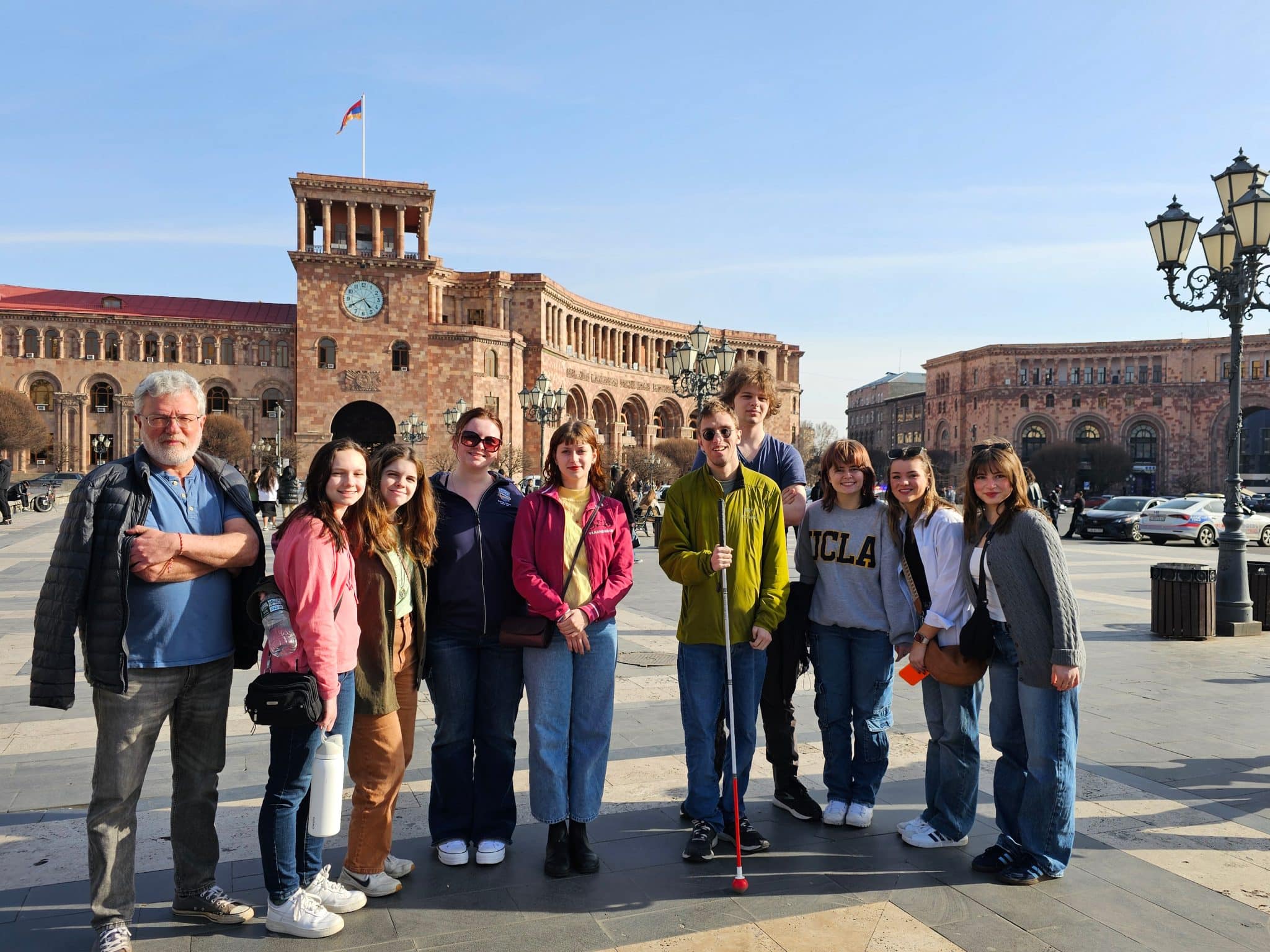
SRAS Guide to Living in Yerevan
What’s it really like to live in Yerevan, Armenia for a semester? Staying long-term in a city is much different from just vacationing there. You’ll need to navigate more of the practical, everyday services of the city and budget to include more miscellaneous and long-term expenses. Thus, this guide covers everything from haircuts to pharmacies […]
SRAS Guide to Living in Tbilisi
What’s it really like to live in Tbilisi for a semester? Staying long-term in a city is much different from just vacationing there. You’ll need to navigate more of the practical, everyday services of the city. You will also need to budget for more miscellaneous and long-term expenses. Thus, this guide covers everything from haircuts […]
SRAS Guide to Living in Riga
What’s it really like to live in Riga, Latvia for a semester? Staying long-term in a city is much different from just vacationing there. You’ll need to navigate more of the practical, everyday services of the city and budget to include more miscellaneous and long-term expenses. Thus, this guide covers everything from haircuts to pharmacies […]
SRAS Guide to Living in Warsaw
What’s it really like to live in Warsaw for a semester? Staying long-term in a city is much different from just vacationing there. You’ll need to navigate more of the practical, everyday services of the city and budget to include more miscellaneous and long-term expenses. Thus, this guide covers everything from haircuts to pharmacies and […]