 Family of Sites
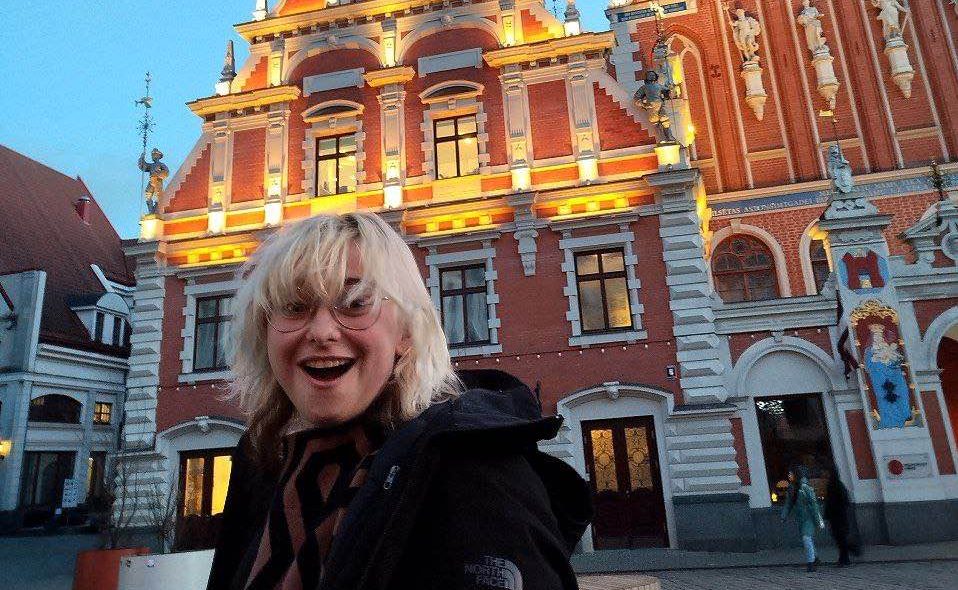
Over two weeks in early January, SRAS students experience Orthodox Christmas, and practice their Russian in an environment that immerses them in both Russian and Latvian history and culture. The Winter Break in Riga program offers a unique opportunity to explore the vibrant European capital of Riga while meaningfully engaging with locals and building intercultural skills. Read below the experiences of real students who have attended this short but transformative study abroad program!
Julia Saunders, 2026
Julia Saunders is a student at Central Washington University majoring in Russian and Spanish.
I’m what my family calls a “forever student.” This, of course, is their polite way of saying I’m almost pathologically obsessed with learning. I literally can’t stop myself. The year after graduating with my BFA, I started studying German, French, Spanish, and Russian and got my AA. Whenever I see my friends from high school, they ask what new academic rabbit hole I’ve tripped myself down. This year I started graduate school studying translation. My specialization is Spanish, but after hundreds of hours of independent studying, I added on Russian. My Russian skills are what my advisor calls “one note,” meaning they’re mainly confined to the written word. I’ve had little chance to practice speaking and listening with native speakers, and much of my conversation experience has happened in the four walls of a classroom. I had a goal in 2025 to strengthen my speaking skills. As the end of the year approached, I felt further and further from achieving this, constantly waylaid by paper deadlines and work meetings.
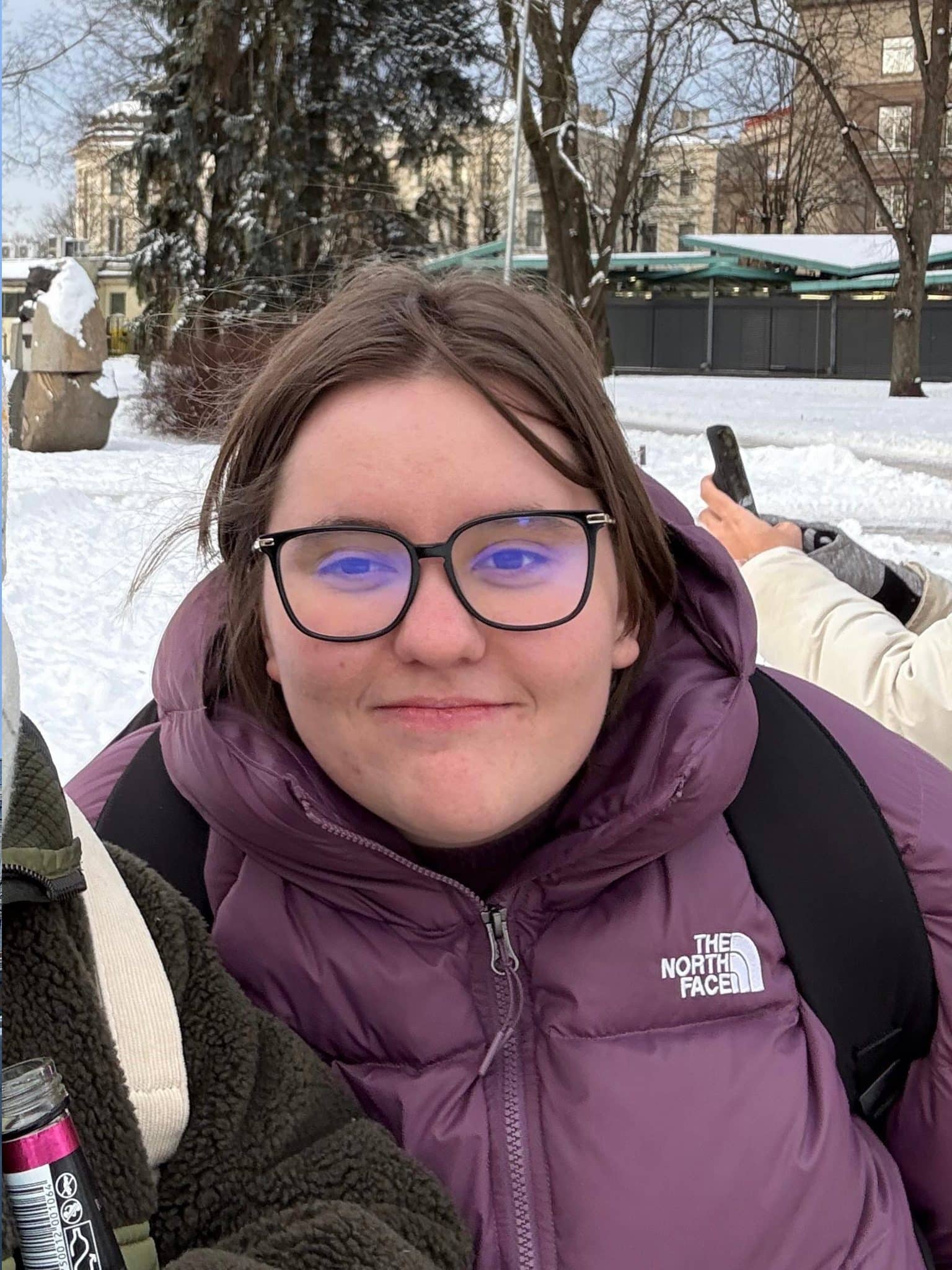
My advisor had suggested studying abroad to strengthen my language skills and take a break from my workload. A lot of people have this idea that translation only requires the ability to read in a language, but translation competence comes from competence at every level of the sentence—phonological, morphological, syntactical, etc. You have to understand the deeper cultural context of a text before you translate it, and knowledge of aspects of spoken language such as onomatopoeia is also often required. I translated an interview recently where a girl talked about Shapoklyak visiting her classroom on the first day of school. If I hadn’t seen Cheburashka, I would have missed this reference and it would have changed the tone of the piece. I knew that I was missing this key component that would boost my translation skills to the graduate level. My advisor’s suggestion seemed great in theory, but I’m a nontraditional grad student at Kent State taking undergrad classes at CWU and working about 30 hours a week. Taking time off felt impossible and a bit silly. One day, my undergrad Russian professor forwarded me an email from SRAS about their winter program with a note that it would be a great opportunity for me. Their one-week program fit perfectly into my short winter break, and I applied that evening.
My professor was right—SRAS’s Latvian winter program was indeed the perfect fit! I spent 10 days immersed in Latvian culture and the Russian language, and I took 20 hours of instruction from the fantastic instructors at Liden & Denz. I was a bit nervous about being the only post-undergrad-aged person, but our group had a wide range of people who were all eager to connect and hang out. Our trip to the Christmas market on the first day cemented our bond as a group (nothing says friendship like drinking hot Black Balsam in 15-degree weather). Throughout the week, we ate lunch together as a group, went on extra outings, and texted about homework. I bonded with an older learner over our love of libraries, and one of the freshman students had the same connection home as me, so we helped each other navigate the airports and passport control.
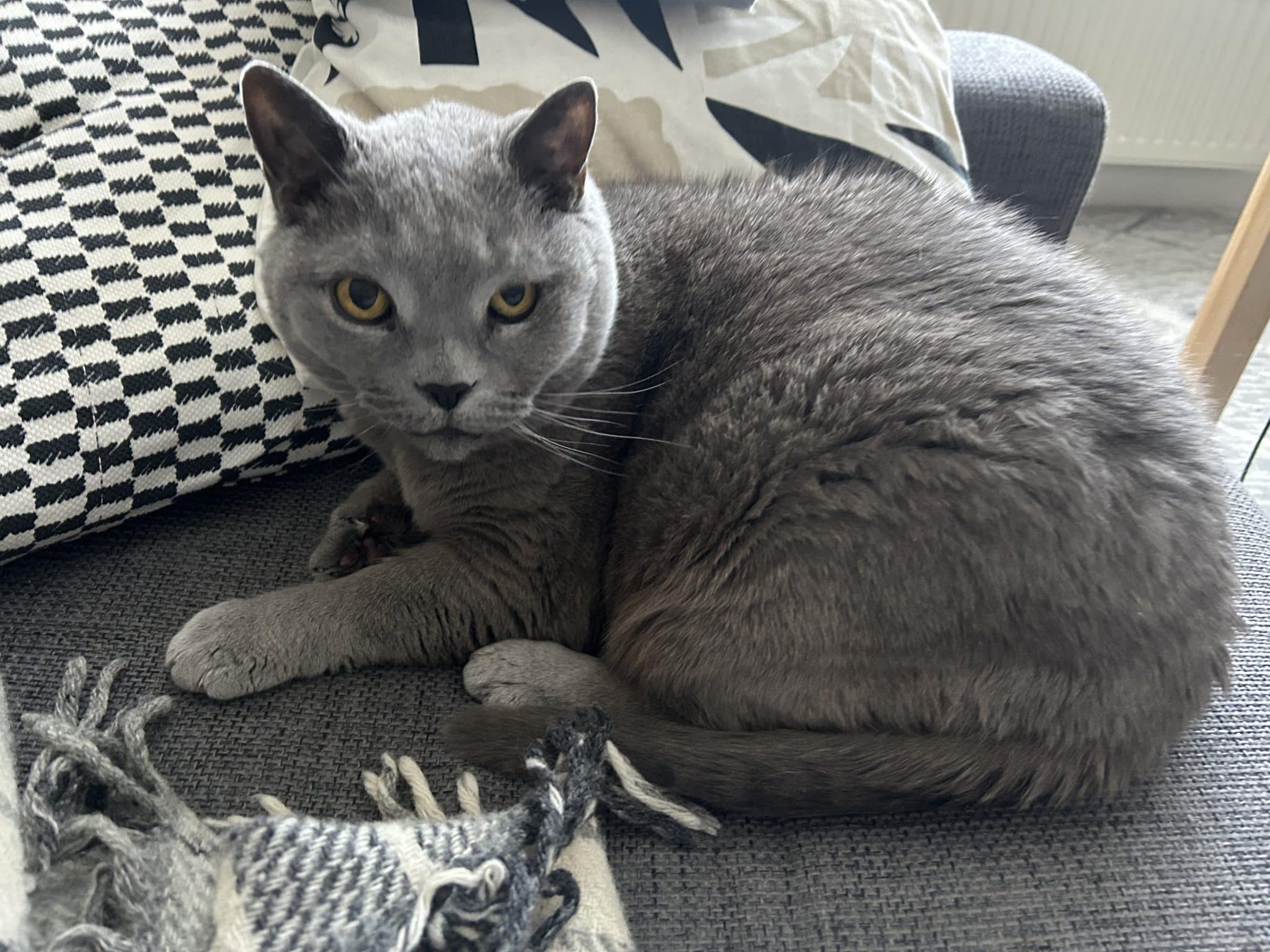
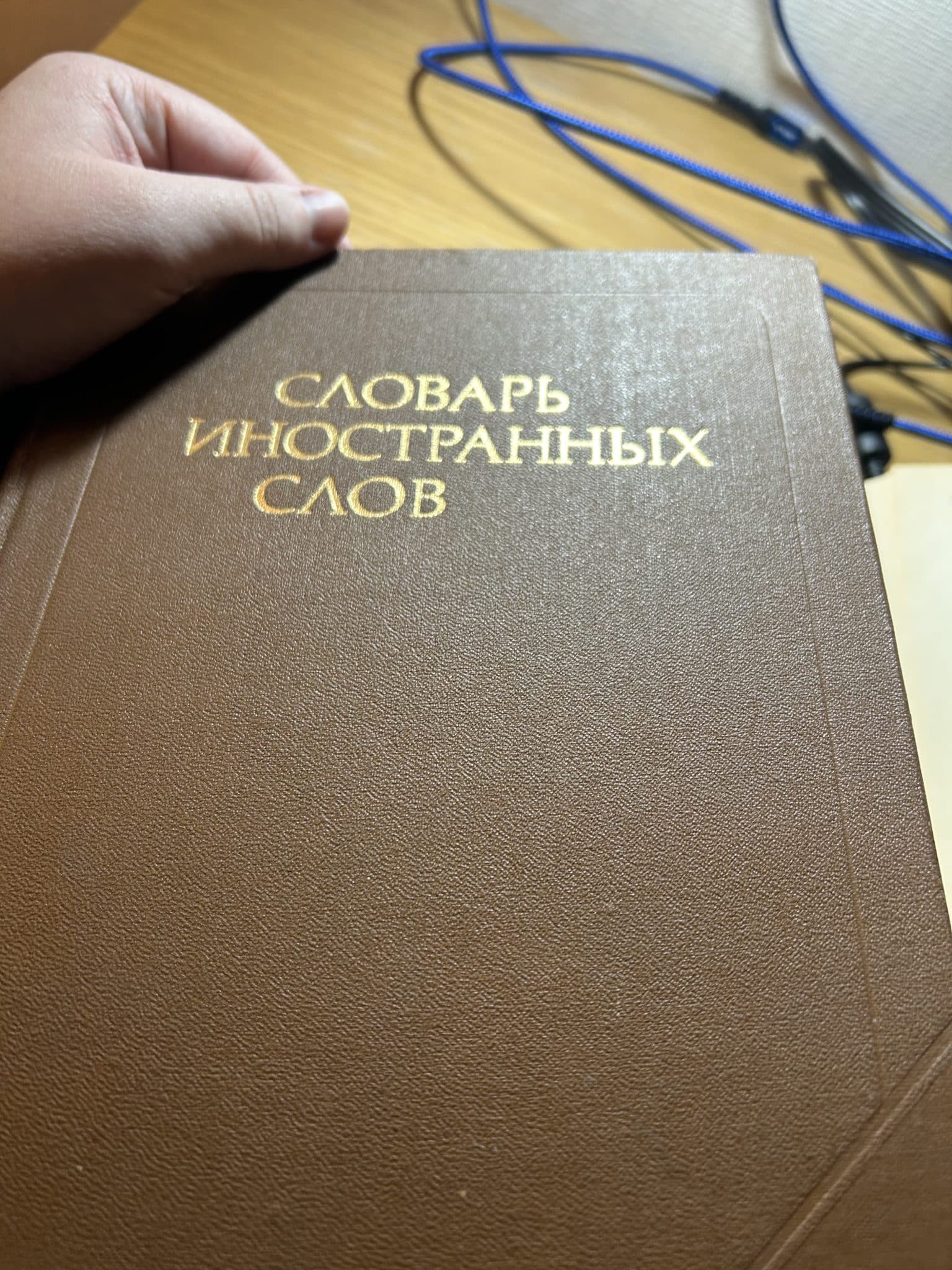
One of the most impactful parts of my trip, surprisingly, was the off-hours I spent hanging out with my host family. My host mother in Latvia was a retired civil engineer with a Russian Blue cat and a large collection of books. While I was in class, she would pick out Russian linguistics textbooks or etymology dictionaries and leave them on my desk to read when I got home. In the evenings, she would tell me stories while she cooked about traveling to St. Petersburg and what life was like before the fall of the Soviet Union. Honestly, the biggest thing I gained from the trip was confidence in my own abilities. The more I had to converse with others on my trip, the easier it got, and the more I learned that even if I make mistakes, I can still get my point across. To improve, you have to try, and you won’t try if you’re always afraid of making mistakes. The SRAS program helped me overcome that fear and clear a roadblock in my language learning journey. It connected spoken language to the written word to allow me to strengthen my translation skills to a graduate level. And (at least until my next SRAS trip) my overwhelming urge to go out and learn has been satiated.
Isabella Moore, 2025
Isabella (Izzy) Moore is a student at Cornell College majoring in International Relations and Russian Studies.
When I first began this journey, many people told me that traveling abroad creates a dramatic shift in lifestyle; that it can fundamentally change who you are. In the beginning, I assumed this was a dramatic overstatement: simply a way to get me excited for the trip and stave off any jitters I may have had. Now, returning home after a semester in Riga, Latvia, I can confidently confirm that this experience changed my life. Thanks to the SRAS team and their programs, I will never be the same person I was before spending that snowy January in the beautiful capital city of Latvia.
The Power of Communication Abroad
Many of these perspective-changing events occurred while I was doing things that would seem mundane at home. For instance, when I took a late-night cab ride with a friend. In this case, neither of us spoke the local language, Latvian. My friend was a Ukrainian who had also recently arrived in Latvia. We communicated together and navigated the city by speaking Russian, our common language, and a language commonly spoken in Riga. Our cab driver had posted a sign stating that he was a new immigrant from Ukraine and, like us, didn’t understand Latvian. My friend’s face lit up at the sign, and she began speaking excitedly to this man in Ukrainian. They were strangers, but it was like she was speaking to an old friend, and he responded in kind. There was something so warm in the way they addressed each other, while they were reveling in speaking their native language to each other, it seemed like they forgot they were a forced world away from their homeland.
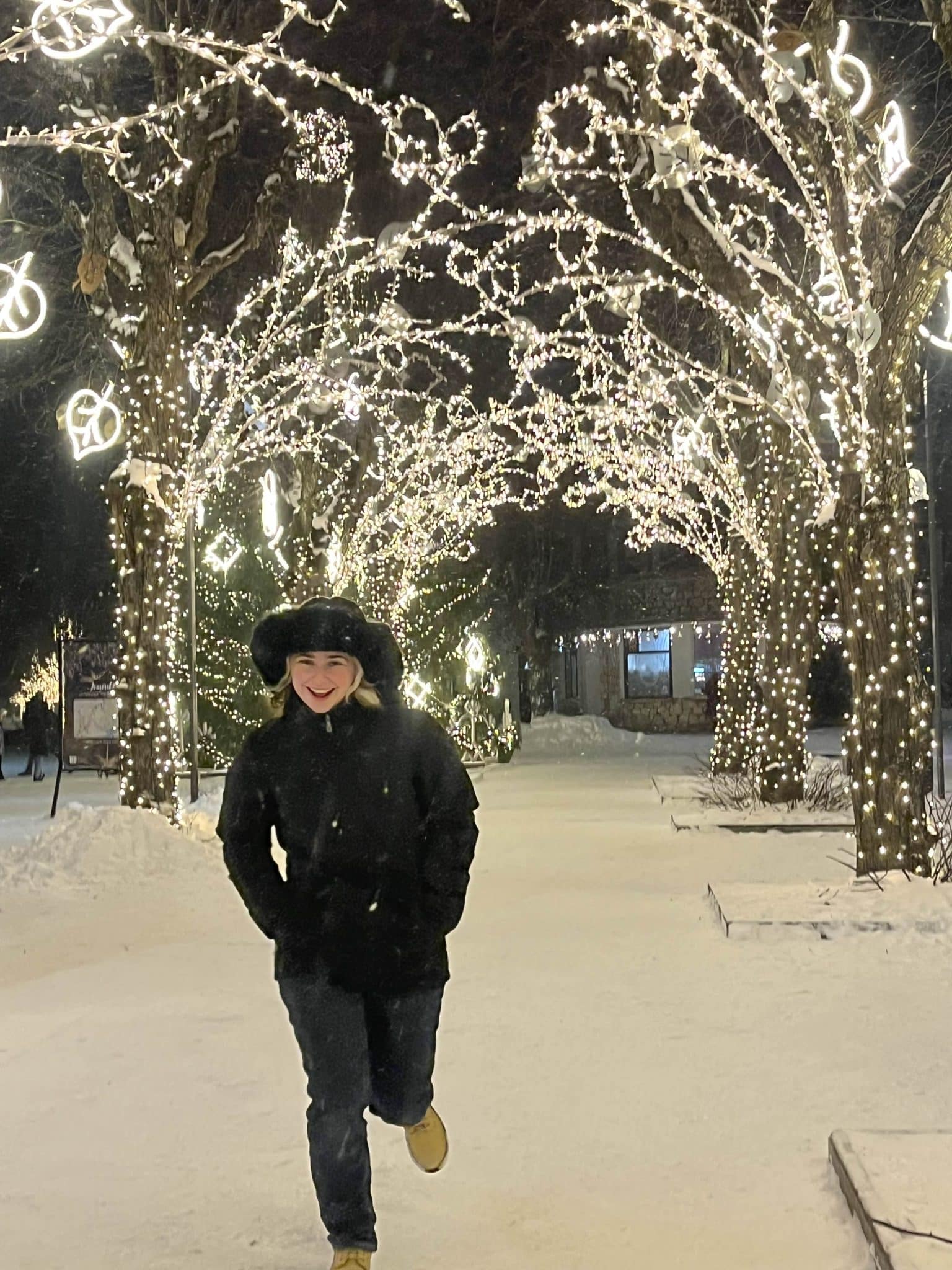
As I watched them enthusiastically communicate, it occurred to me that this was the result of the innate linguistic and cultural bond between two people of the same nationality. It was just more strongly expressing itself because they were both outside their homeland. Before this encounter, I had never considered the cultural implications of linguistics, and I’m not sure I would have, had I not shared this moment with them.
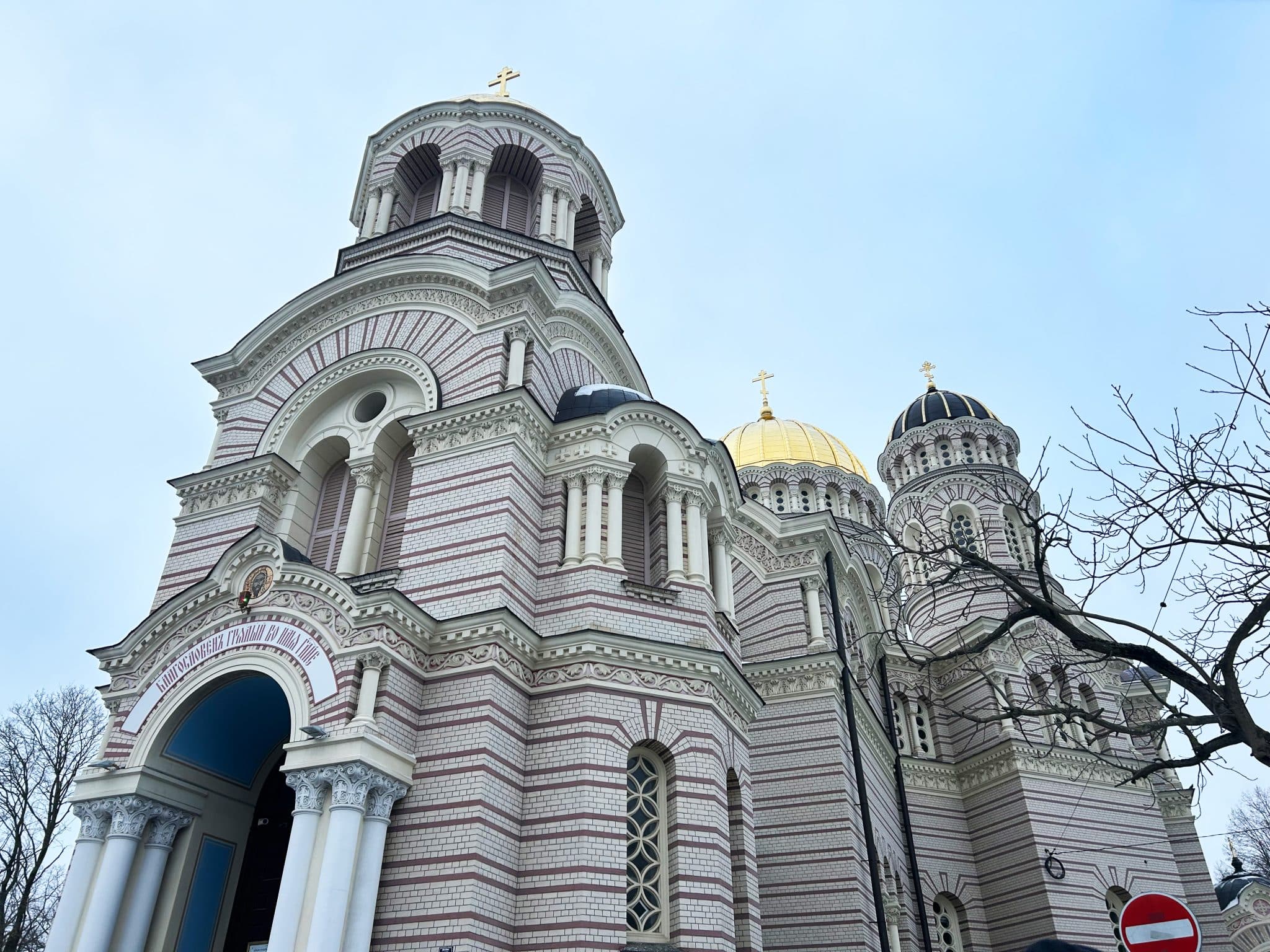
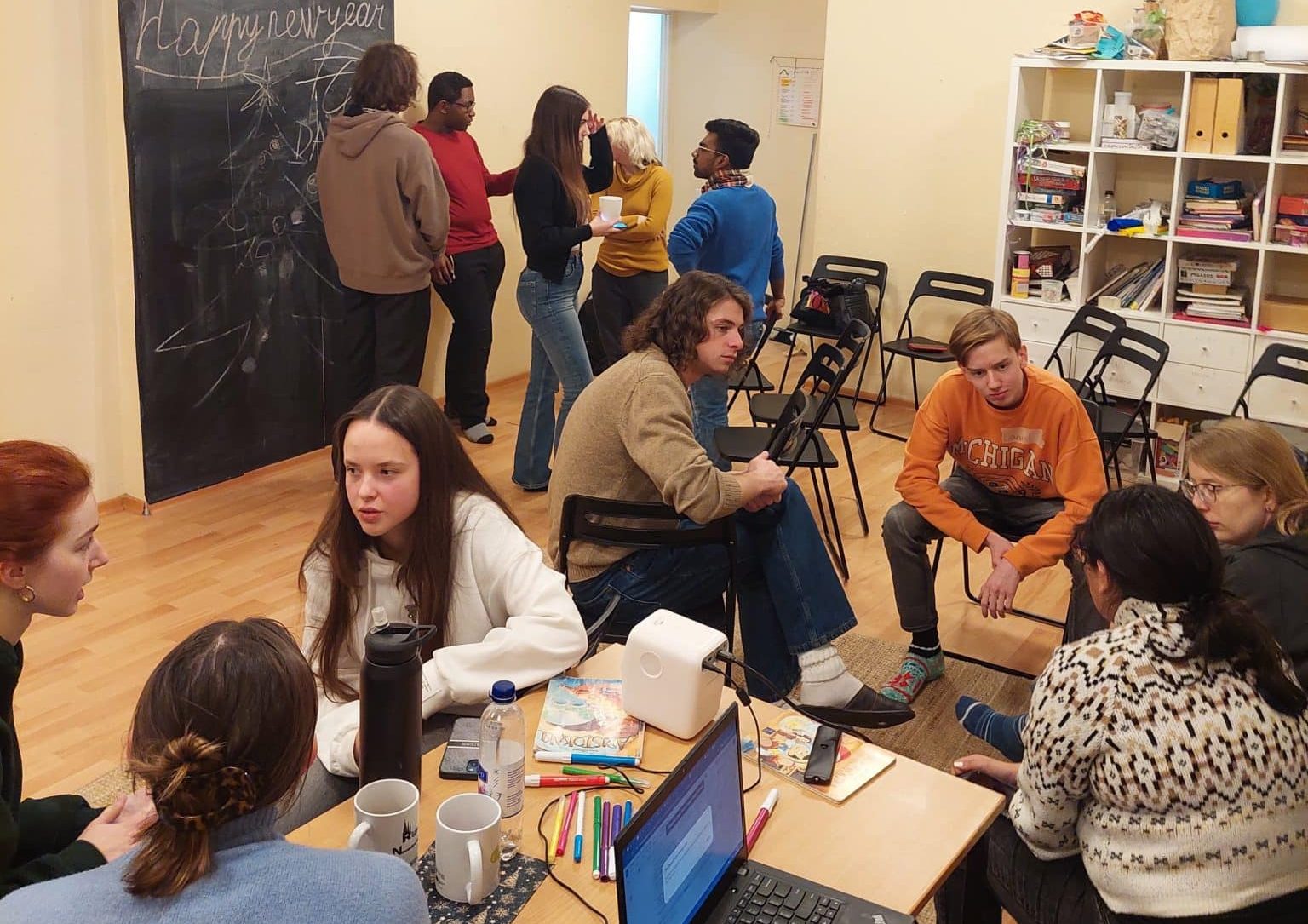
I also had the unique experience of attending a conversation club and language exchange with locals and recent immigrants. SRAS introduced us to a girl from Ukraine who worked with a local nonprofit in Riga. She invited us to meet come share our culture with others, practice our Russian, and help other practice their English. That next Friday evening, we did just that at Riga’s iconic St. Peter’s Church. After introductions, we were split into smaller groups for conversation. I ended up initially with two mothers from Ukraine. We spoke a mix of Russian and English, and I learned about the ladies’ lives in Ukraine before the war, and about all their kids. I was surprised how vulnerable they were willing to get about their lives. When we switched to discussing America, I laughed at the stereotypes that came with questions like, “Does everyone own a gun?” and “Do you guys eat everything with ketchup?”. I also had the opportunity to speak with others, including a man who had recently arrived from Russia. In one night alone I had met new friends and went through a roller coaster of emotions.
Meeting New People and a New Culture
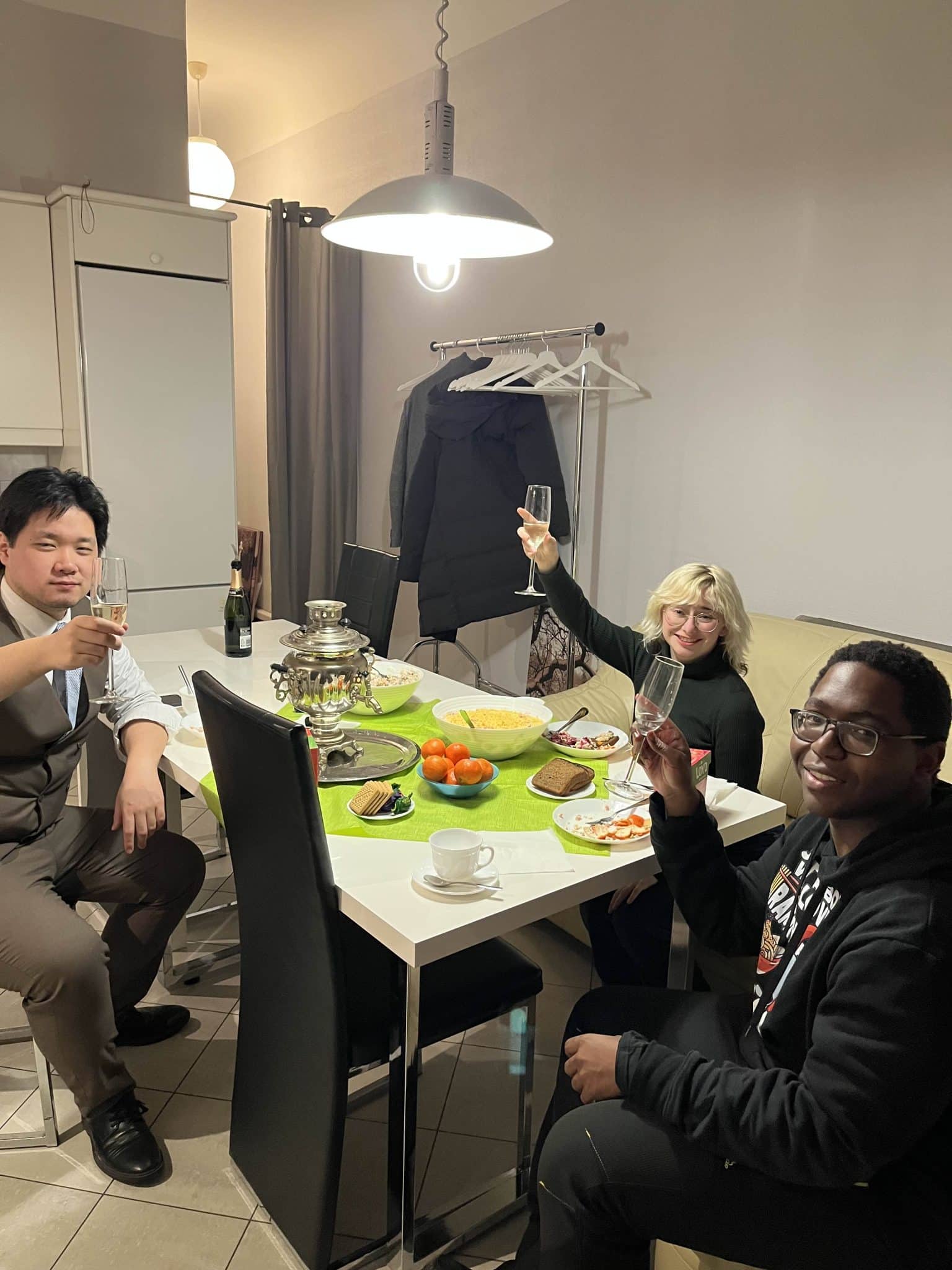
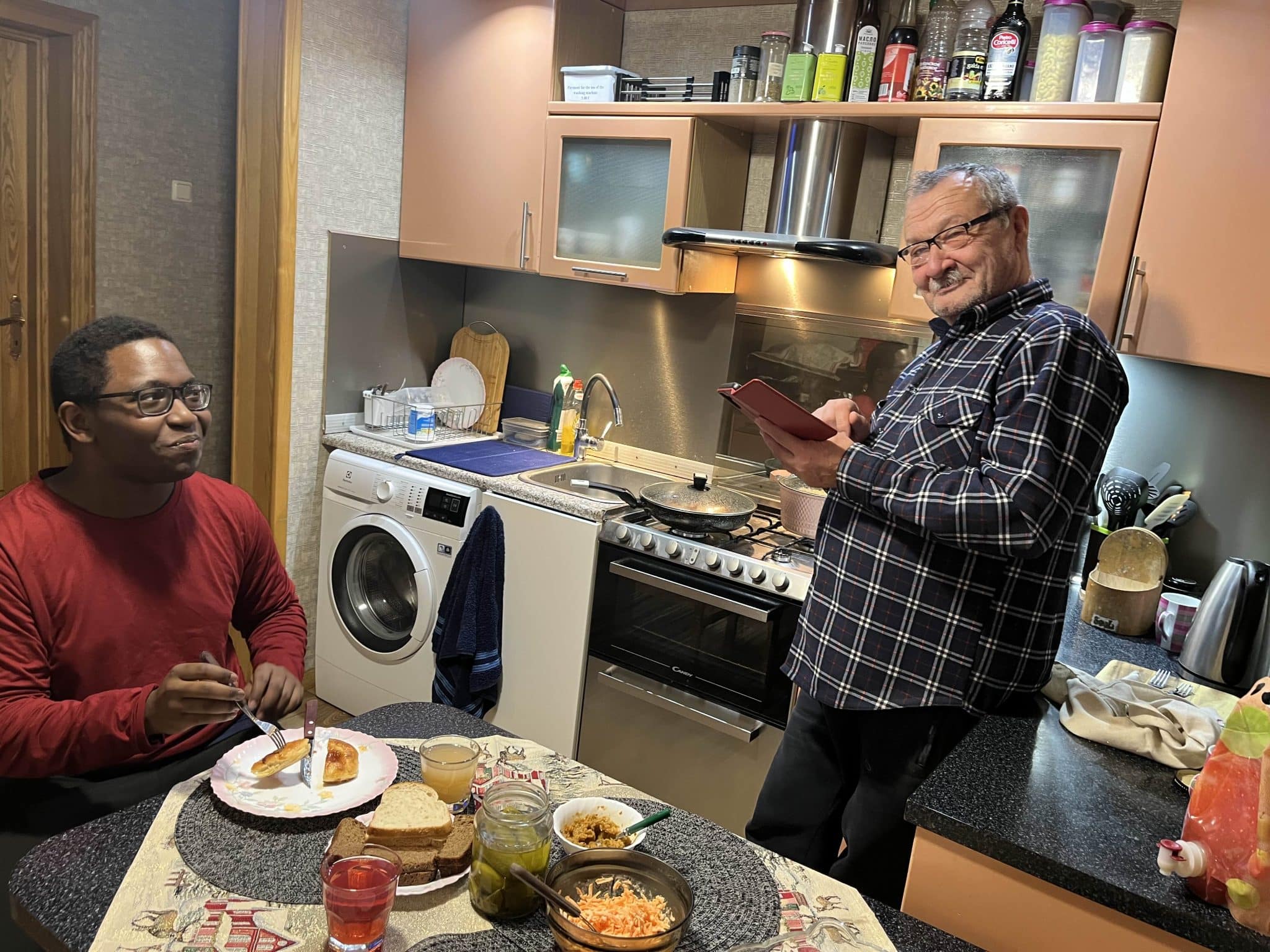
My host family also provided some incredible interpersonal experiences in their thoughtful and kind interactions with me and fellow student who stayed with them. One of the most special evenings I spent in Riga was Orthodox Christmas. They made an individual handmade piroshki special for each of us. My fellow home stayer was brought to tears because he said it “tasted like home” and they made me a cinnamon pie because we had an inside joke about cinnamon. We made them a card and they kept it on the mantle which reminded me of when I was younger.
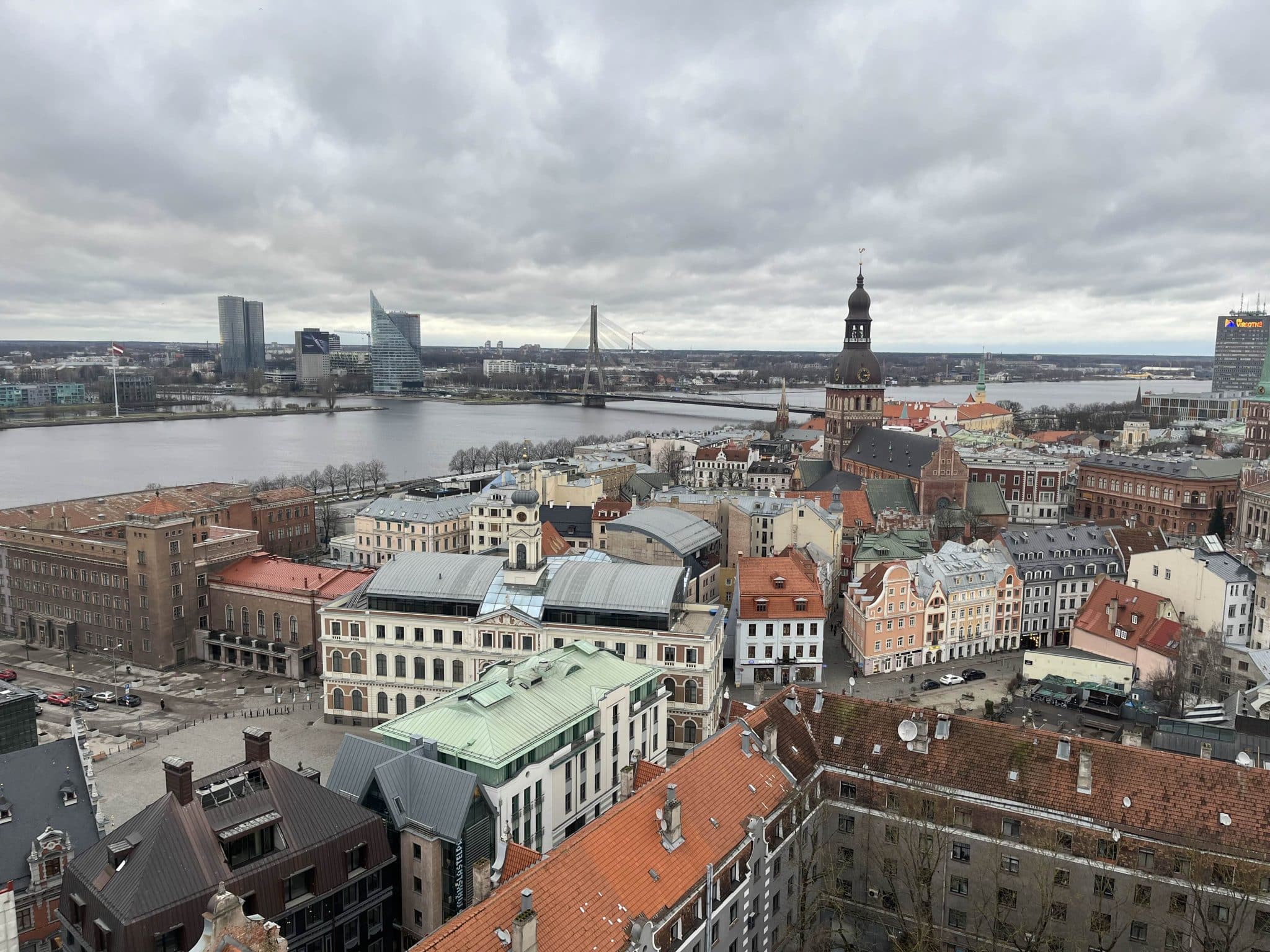
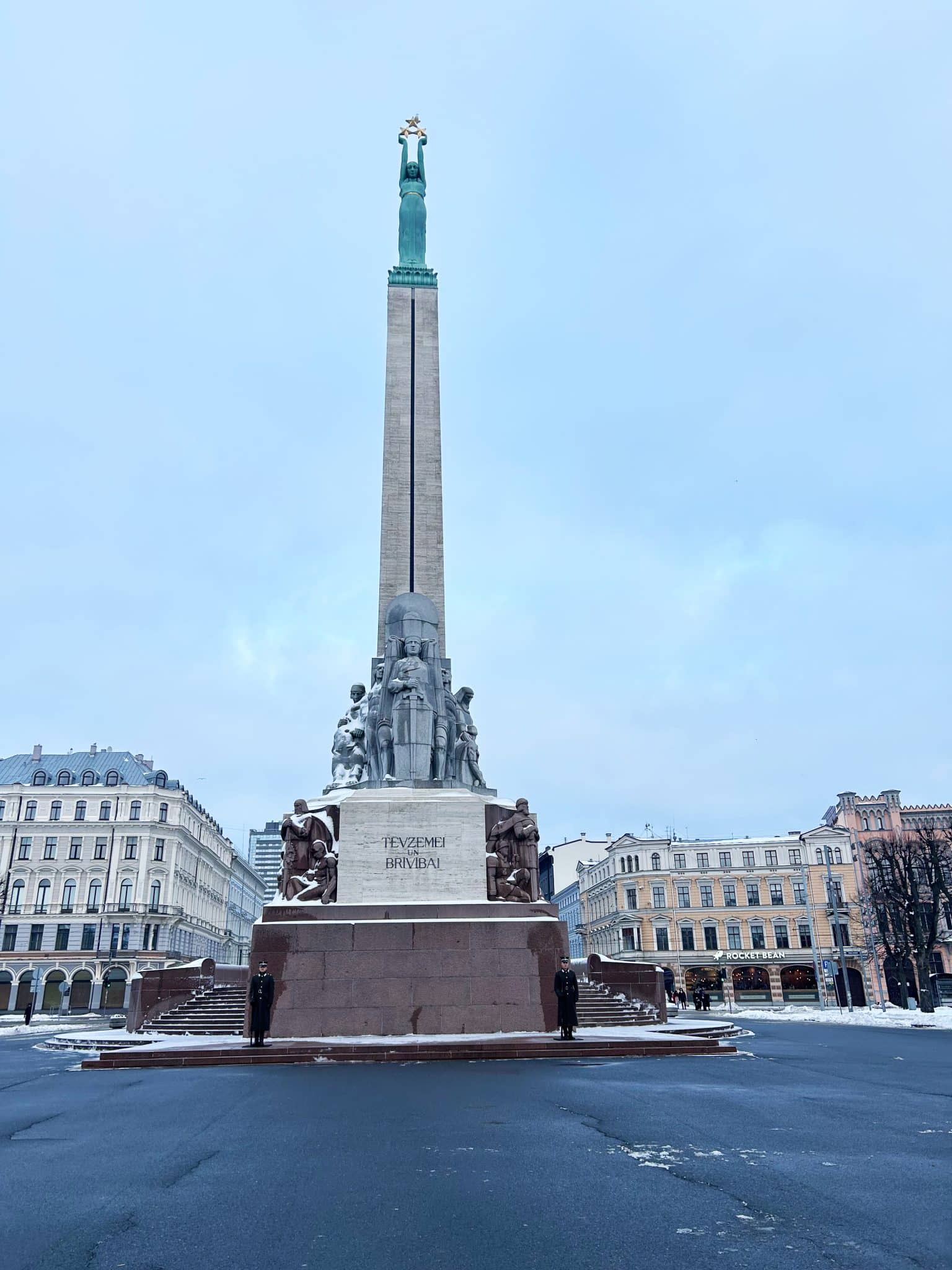
SRAS also introduced us to many historic places that mean so much to Latvians. This includes the Freedom Monument, which honors the soldiers who lost their lives during the Latvian War of Independence of 1918, along with Riga’s Old Town, which houses the famous St. Peter’s Church and so much of the city’s long history. On one particular night, SRAS organized a night out at the historic Chekhov Theatre, which was built in 1883 and remains the oldest Russian-speaking theater outside of Russia. Live theater has long been a cherished tradition to Eastern Europeans and it is deeply rooted in the culture, history, and social life of the region. For me personally, as a costume designer at my college’s theater department, I was struck by the cultural focus on costume design as a key storytelling element, rather than set design, which is more typical in American theater.
Overall, the exposure to language and culture that I had in Riga motivated me in my academic career double-majoring in international relations and Russian. Getting to know Latvians in their homeland and Ukrainians in their new home-away-from-home, I have come to realize how entwined location, language, culture, and the individual really are. In addition to gaining interpersonal and cross-cultural skills, my Russian language abilities were vastly increased, and I am now participating in two new academic projects centered around the Russian language that I would not have had the skill necessary to participate in before this. I learned as well more about the kind of person I am through my interactions with people who have different social norms. During my time in Riga, I experienced both heartwarming moments, along with lessons you can’t learn in a classroom. Beyond all, I learned that dots on a map really are unique places filled with fascinating cultures and incredible individuals. I’ve also returned as one of those people who tell anyone who will listen how incredible study abroad is and what a life-changing experience it can be. I encourage anyone reading this to consider what they might gain from heading abroad.
You’ll Also Love
Bishkek Study Abroad Reviews
We asked some SRAS graduates to share their open and honest evaluations of their experiences on SRAS Study Abroad in Bishkek. SRAS actively seeks out feedback from students on all programs so that we can continually improve our offerings. Kathryn Watt (Spring, 2019) For the last four months I have lived and studied in Bishkek, […]
Bishkek vs. Yerevan: The Best Study Abroad Location
I spent eight weeks in Yerevan, Armenia with SRAS and another eight with a US-government run program in Bishkek, Kyrgyzstan (SRAS also hosts programs in Bishkek). Afterwards, I was surprised by how similar the two cities felt despite being thousands of miles apart. That said, each city also has characteristics that make it unique which […]
Warsaw, Poland as a Destination for Learning Ukrainian
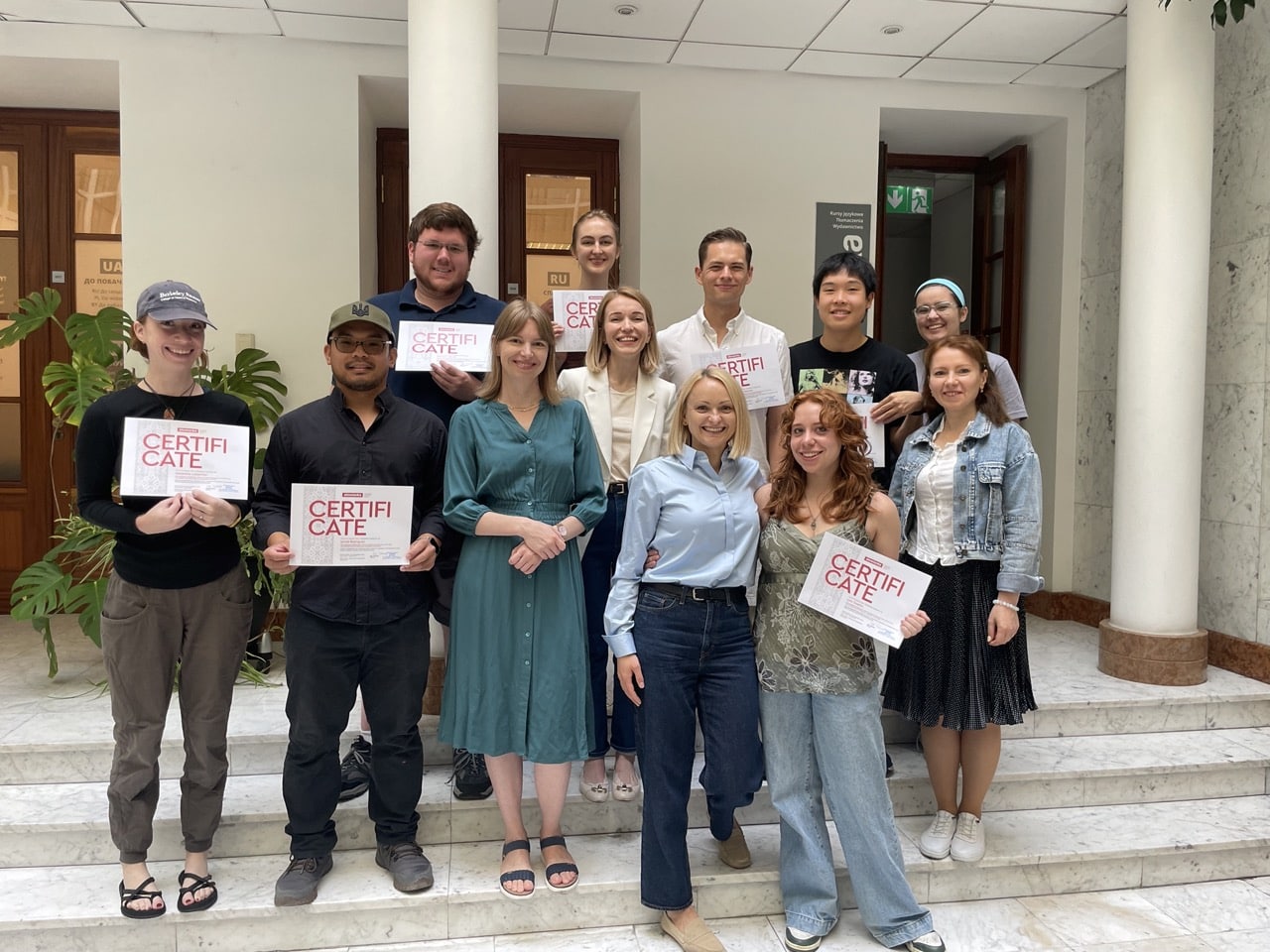
Each summer, SRAS offers courses in Warsaw, Poland in Polish and Ukrainian language and culture. Students can specialize in either language and all participants take part in the Slavic Seminar – a series of lectures and workshops diving into topics of identity, language, literature and film, history, and more – and enjoy an extensive cultural […]
Review of Identity and Conflict in the Post-Soviet Space in Tbilisi, Georgia
If you’d have asked me on June 10th, 2022 when I landed in Tbilisi if I’d be here, in Georgia, almost a year later, the answer would have almost definitely been “no.” However, I had so many great experiences and met so many extraordinary people that summer abroad that I felt the need to return […]