 Family of Sites
If you’d have asked me on June 10th, 2022 when I landed in Tbilisi if I’d be here, in Georgia, almost a year later, the answer would have almost definitely been “no.” However, I had so many great experiences and met so many extraordinary people that summer abroad that I felt the need to return for spring 2023.
Programs Abroad in Georgia
My first summer was spent learning Georgian on the American Councils’ Eurasian Regional Language Program. I went to Georgia sort of as a passion project. I’d wanted to study Georgian for a long time. Since finding the small books that my middle school had on the Caucasus, I’d been fascinated by the region and Georgia in particular because of its middle ground, or possibly a place all its own, between Europe and Asia. My university, Vassar College in New York, also had a fellowship that would fully fund summer language programs, making this even more accessible.
SRAS’ programs are recommended by my university’s international programs office. On the SRAS website, I found the Identity and Conflict in the Post-Soviet Space program. It was exactly what I wanted for myself. The identity and conflict courses would allow me to fulfill requirements for my international studies major while giving me access to Russian language courses higher than the level available at my university. Most importantly, the program took me back to Georgia. Over the next few months, I diligently filled out every form and emailed every necessary person, to ensure that I’d be back on a plane to Georgia in January.
Studying Russian in Tbilisi
When I got to Tbilisi, I was most nervous to start my Russian classes. Because I was going to be at such an advanced level, I was going to be one on one with my teacher, which meant that there was nowhere to hide, no room to slack off. Though it was difficult and a bit awkward for me, I could tell from the first day that the class was going to be exactly what I needed. The readings were understandable, but with a lot of new vocabulary, which I was desperately in need of. Though I was nervous at first, I found the learning environment was perfect for helping me feel more comfortable speaking and allowing myself to make mistakes in Russian. I was pleasantly surprised by my experience in Russian classes, and from what I’ve heard, my fellow course-mates were also pleased with the quality of their classes as well.
Studying Diplomacy in and Traveling the Caucasus
The focal point of the program is the lectures on identity and conflict in the post-Soviet space. Each week we had lectures, either given by our two main lecturers, or by one of many professionals that SRAS and their local partners, Novamova, arranged to speak with us on various topics relating to their fields and passions. Never in my life had I had the opportunity to connect with so many people who had so much experience in this part of the world that interests me most. The post-Soviet space is so interesting because all of the countries have an overarching experience of being a part of the USSR, but the conditions they left with and the choices they had to make have left them in dramatically different socio-economic and political positions and with nuanced views of the Soviet legacy.
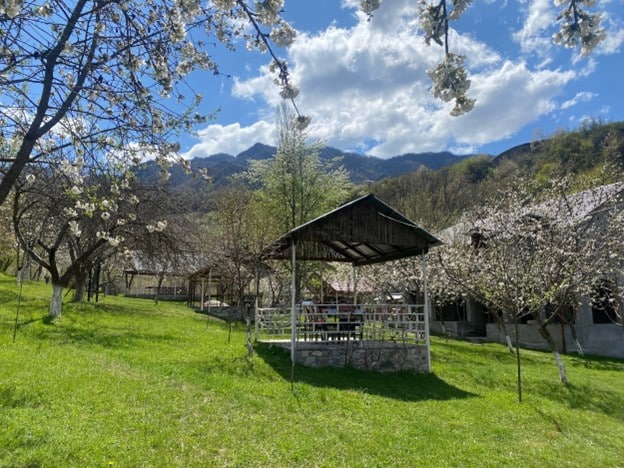
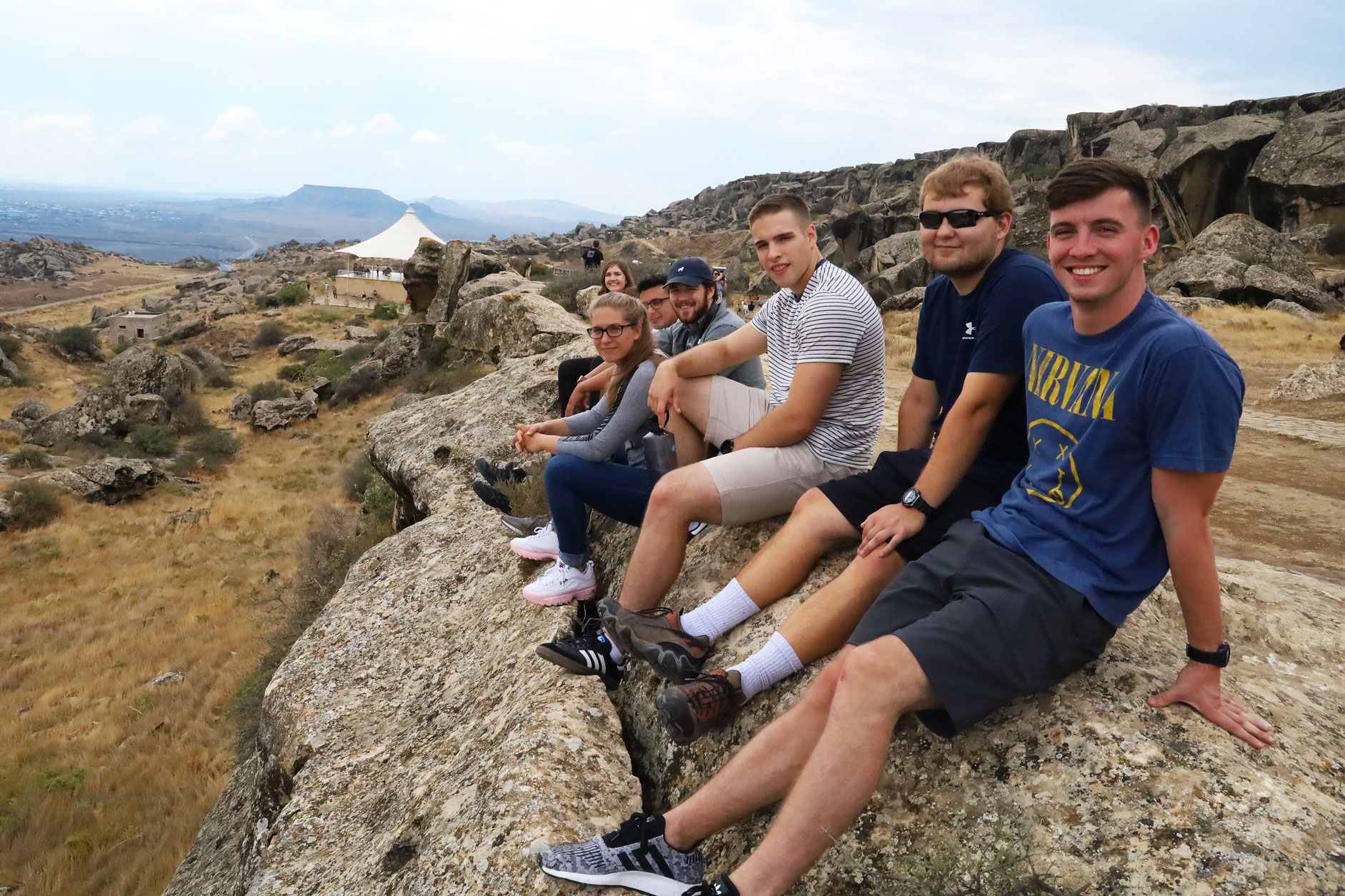
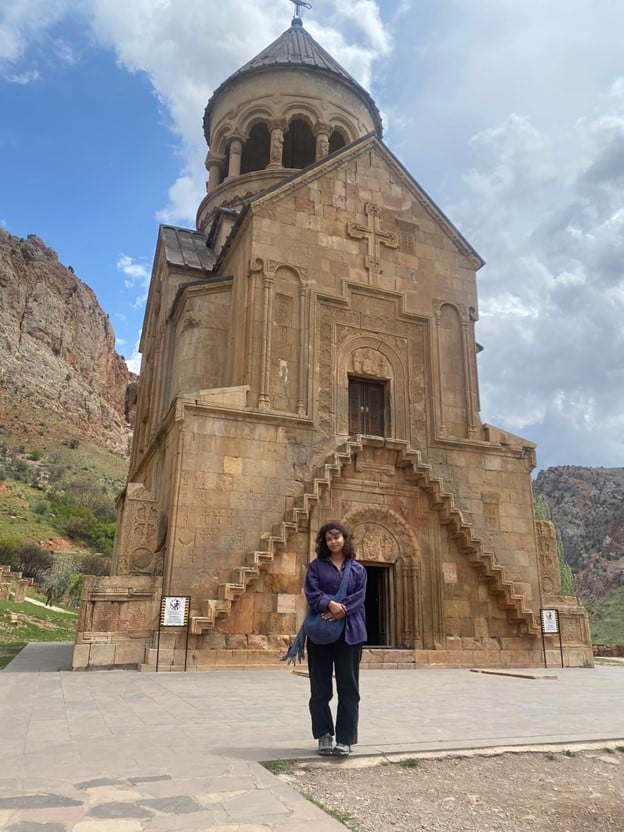
My hands-down favorite parts of the program were the periods of travel in Armenia and Azerbaijan. During none of the great lectures did I feel like I absorbed as much information as I felt like I did while traveling. While I had met people from Georgia while in the U.S., I had never met anyone from Armenia or Azerbaijan. I had never had any chance to hear perspectives from either of those countries firsthand. Our amazing guides, in showing us mosques, churches, the local nature, and so much more, revealed the meanings behind these beautiful places with a wealth of personal knowledge about their countries’ culture and history. The group seemed to especially enjoy the surprise we received from our experience in Azerbaijan. People we met in Georgia tended to have neutral to negative views about visiting Azerbaijan. However, our group found the northern part of Azerbaijan through Shamakhi and Sheki to be breathtaking and unique and the complexities of Azerbaijan’s culture astounding.
For me, the main value of the Identity and Conflict in the Post-Soviet Space program was in better understanding the Caucasus and its cultures. I have been interested in the Caucasus for many years, longer than I have even been studying Russian. In my opinion, as with many places in the world, the Caucasus is a place that you can’t even begin to understand until you visit it yourself. Though much of the material for the course was focused on the current conflicts in Ukraine and Eastern Europe, by basing the program in Tbilisi, and including so much travel throughout the Caucasus, SRAS has created a truly unique experience. I believe that studying in the Caucasus is invaluable to anyone with an interest in international relations, identity formation, or conflict resolution. The post-Soviet space should be a focus of American diplomacy for many years to come and understanding its regional and global value is crucial today.
You’ll Also Love
International Airfare For Study Abroad
SRAS is not in the business of selling plane tickets, with the exception of group educational tours and domestic flights not available for purchase outside of our program host countries. We do, however, continuously monitor flight pricing and travel logistics for our study destinations and we travel a lot ourselves. As such, we are sharing […]
9 Reasons To Visit Batumi, Georgia
When the world first came into existence, the Creator had a big meeting where he divided up the Earth and gave different pieces of land to all the people of the world. As luck would have it, the Georgian people were having a supra (a grand feast) the same day, had a little too much […]
Preparing for and Coping with Culture Shock
Some of our students report not feeling culture shock at all. Some are surprised by how much culture shock they experience. Often, those most affected are those who did not expect it. So how can you prepare to live in a new culture and get the most out of the experience? How do you prepare […]
SRAS Guide to Living in Tbilisi
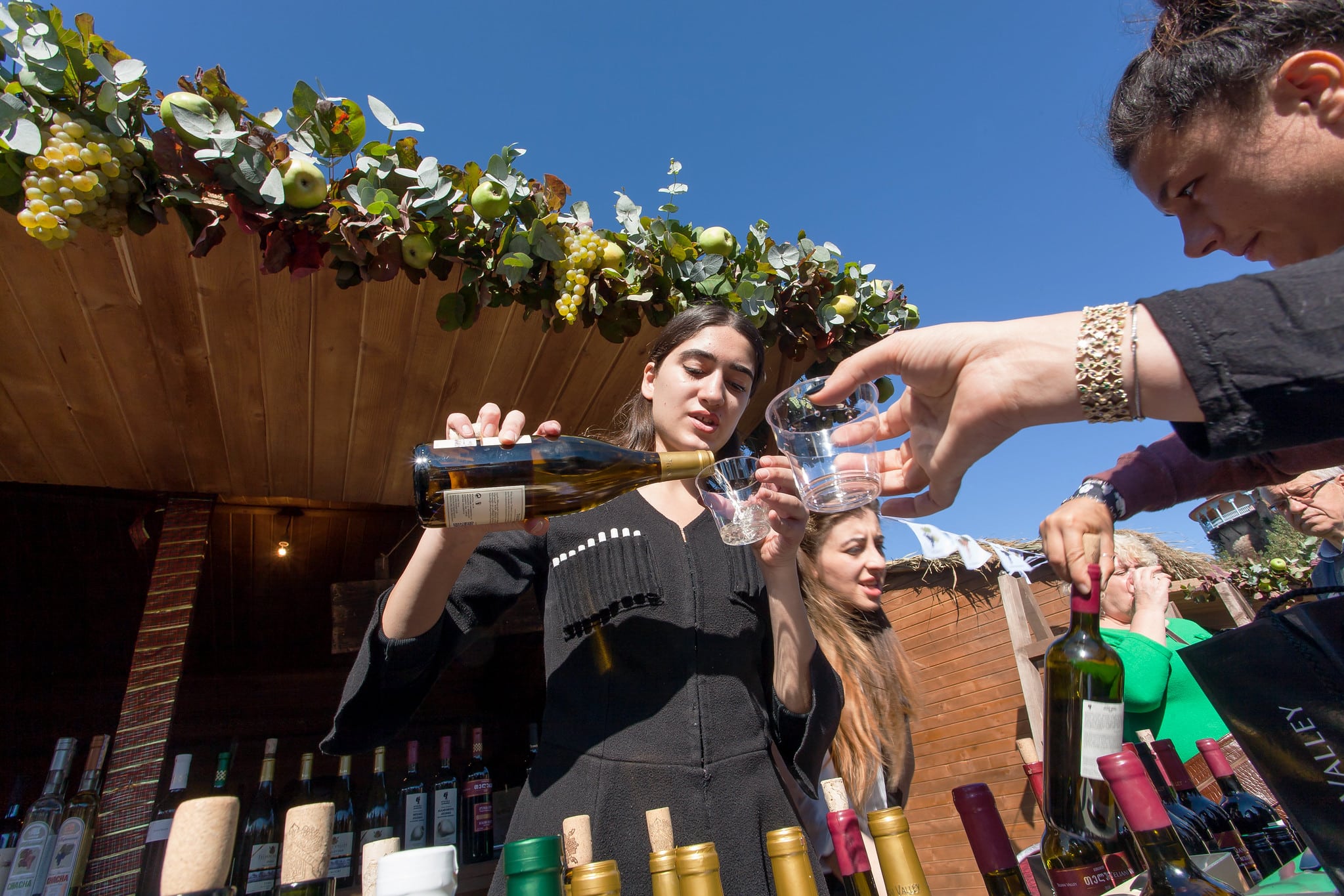
What’s it really like to live in Tbilisi for a semester? Staying long-term in a city is much different from just vacationing there. You’ll need to navigate more of the practical, everyday services of the city. You will also need to budget for more miscellaneous and long-term expenses. Thus, this guide covers everything from haircuts […]
Thrifting in Tbilisi
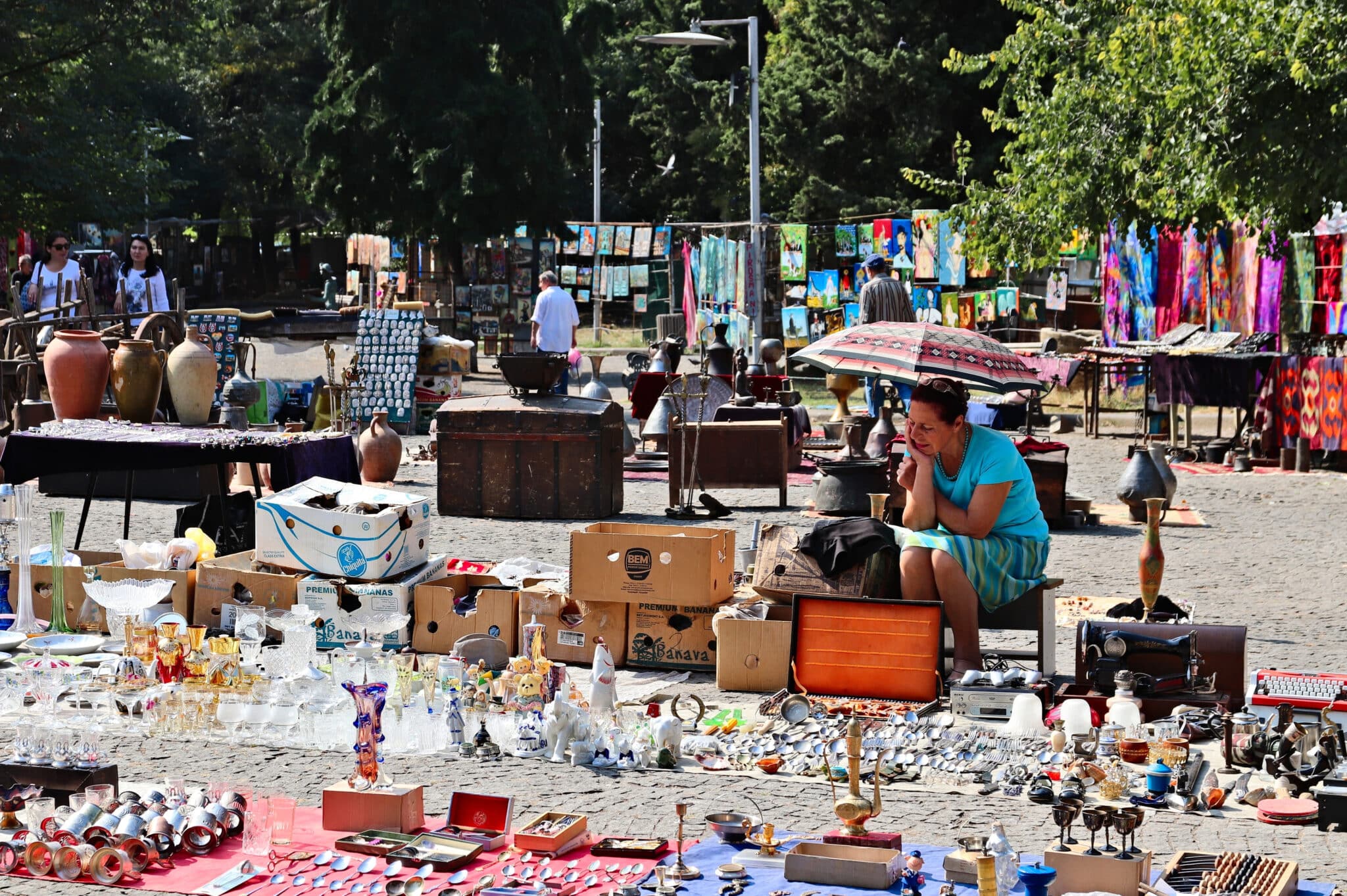
I’ve been an avid thrifter since I was 15 – and am well acquainted with all sorts of thrifting locations in the US. However, I was fairly unprepared for the thrifting scene when I arrived in Tbilisi for my study abroad program. I had done just enough research to know that thrifting existed here, but […]